
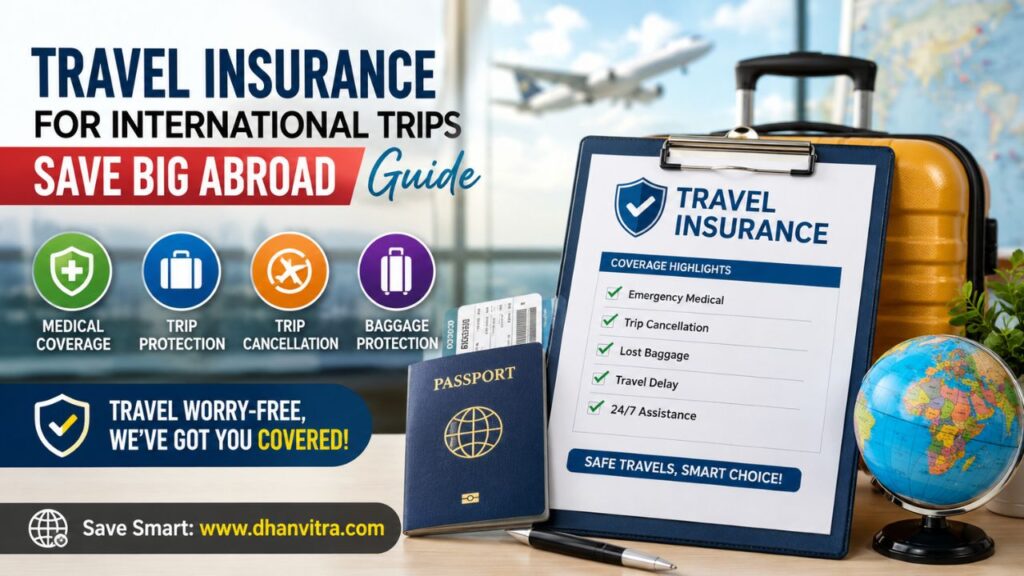
A single medical emergency abroad can erase months of savings in minutes. Missed connections, lost baggage, or sudden trip cancellations often come with unexpected financial stress that most travelers underestimate. International travel today is not just about planning itineraries—it’s about protecting your money, your time, and your peace of mind before you even board the flight.
That’s where Travel Insurance becomes a critical part of smart financial planning. As global travel costs rise and healthcare expenses overseas remain unpredictable, having the right protection is no longer optional. At Dhanvitra, we see travel insurance as a strategic safeguard—one that helps you avoid large, unplanned expenses while keeping your long-term financial goals intact.
Consider a real-world scenario: a family traveling to Europe faces a medical emergency or a sudden cancellation due to illness. Without travel medical insurance, the costs can run into thousands. Similarly, frequent flyers often benefit more from annual travel insurance, while budget-conscious travelers actively compare travel insurance plans to find the best value without compromising coverage. These decisions directly impact how much you spend—or save—during your trip.
In this guide, you’ll learn how to choose the right coverage, avoid overpaying, and identify policies that truly protect you in real situations. By the end, you’ll be equipped to make confident, cost-effective decisions about Travel Insurance that let you travel smarter and worry less.
Common travel disruptions (delays, cancellations, lost baggage)
When planning an international trip, most people focus on flights, hotels, and itineraries, but very few prepare for what can go wrong. Travel disruptions are more common than many realize, especially with increasing global travel demand. Flight delays, last-minute cancellations, and lost baggage are not rare events—they are part of modern travel realities that can quickly turn an exciting trip into a stressful and expensive experience.
Flight delays and cancellations are often caused by weather conditions, technical issues, or airline operational challenges. When this happens, travelers may face unexpected hotel stays, meal expenses, or even the need to rebook expensive last-minute flights. Without proper protection, these costs come directly out of your pocket. This is where Travel Insurance plays a critical role, helping cover additional expenses and ensuring that your trip continues with minimal financial impact.
Lost or delayed baggage is another frequent issue, particularly during international connections. Imagine arriving in a new country without your essentials—clothes, documents, or medications. Replacing these items immediately can be costly, especially in foreign destinations. A good policy can reimburse you for these urgent purchases, giving you both financial support and peace of mind.
Beyond the financial aspect, disruptions also affect your overall travel experience. Missed events, shortened itineraries, and emotional stress can take away from the purpose of your trip. Choosing a reliable travel protection insurance plan ensures that even if things don’t go as planned, you are prepared to handle them without major setbacks.
What Travel Insurance Actually Covers (And What It Doesn’t)
Understanding what a policy truly includes is essential before you buy travel insurance. Many travelers assume that all situations are covered, but in reality, coverage varies depending on the type of plan you choose. A well-structured Travel Insurance policy typically focuses on protecting you from financial risks related to health emergencies, trip interruptions, and unexpected travel issues.
Medical coverage is one of the most important components, especially when traveling abroad. Healthcare costs in countries like the US or parts of Europe can be extremely high. Travel medical insurance international plans usually cover hospitalization, doctor consultations, and emergency treatments. Some policies also include emergency evacuation, which can be life-saving but very expensive without coverage.
Another major area of coverage is trip-related protection. This includes trip cancellation, interruption, and delays. For example, if you have to cancel your trip due to illness or an emergency, travel cancellation insurance can reimburse prepaid, non-refundable expenses like flights and hotel bookings. Similarly, delays may be compensated with allowances for food and accommodation.
However, it’s equally important to understand exclusions. Most policies do not cover pre-existing conditions unless specifically included under travel insurance with pre-existing medical conditions coverage. High-risk activities, negligence, or incomplete documentation during claims can also lead to rejection. Reading the fine print carefully ensures you know exactly what you’re paying for and avoids unpleasant surprises later.
Types of Travel Insurance Plans Explained
Choosing the right type of policy depends on how often you travel, who you’re traveling with, and the nature of your trip. While many travelers simply pick the cheapest option, understanding the structure of different plans helps you avoid gaps in coverage. The goal is to match your travel style with the right level of protection so you don’t end up either overpaying or underinsured.
Below is a simple table that breaks down the most common types of Travel Insurance plans and who they are best suited for:
| Plan Type | Best For | Key Benefits | When to Choose |
|---|---|---|---|
| Single Trip Travel Insurance | Occasional travelers | Covers one trip end-to-end, affordable | Short vacations or one-time international trips |
| Annual Travel Insurance | Frequent travelers | Covers multiple trips in a year | If you travel 2–3 times or more annually |
| Family Travel Insurance | Families traveling together | One policy for all members, cost-effective | Family holidays with children or elders |
| Multi Trip Travel Insurance | Business or frequent flyers | Multiple trips with flexible coverage | Frequent short trips across the year |
| Student Travel Insurance | Students studying abroad | Long-duration coverage, includes medical and study-related risks | Overseas education or exchange programs |
| Long Term Travel Insurance | Digital nomads, extended travelers | Extended coverage for months or years | Long stays or work-from-abroad lifestyles |
| Cruise Travel Insurance | Cruise travelers | Covers cruise-specific risks and interruptions | Multi-Trip Travel Insurance |
Each of these plans is designed with a specific use case in mind. For example, if you travel only once a year, a single-trip insurance plan is usually enough. But if your lifestyle involves frequent international trips, an annual insurance plan can offer better value and convenience.
It’s also important to think beyond basic coverage. Some plans include add-ons like adventure sports, business insurance benefits, or coverage for delays and cancellations. Understanding these differences allows you to choose a policy that fits your real needs rather than relying on a one-size-fits-all approach.
How to Choose the Best Travel Insurance for Your Trip
Finding the best travel insurance is not about picking the cheapest plan—it’s about choosing coverage that matches your specific travel needs. Every trip is different, and factors like destination, duration, age, and planned activities all play a role in determining the right policy. Taking a few extra minutes to evaluate these details can save you significant money and stress later.
Start by considering where you are traveling. Medical costs and risks vary widely across countries, so your coverage limits should reflect your destination. For example, a trip to a high-cost healthcare country requires stronger international travel health insurance coverage than for nearby destinations. Similarly, longer trips may require higher limits or long-stay insurance plans to ensure continuous protection.
Next, compare policies carefully rather than choosing blindly. Use tools to compare travel insurance plans and focus on key elements like coverage limits, deductibles, and inclusions. A plan that appears cheaper may exclude essential benefits, while a slightly higher premium might offer comprehensive protection. This is where understanding value becomes more important than just focusing on price.
Finally, consider your personal situation. If you are traveling with family, a family insurance plan may offer better savings. If you have existing health issues, look specifically for travel insurance that covers medical conditions. Taking the time to align your policy with your actual needs ensures that you are not just insured—but properly protected throughout your journey.
Tips for cutting costs on trip insurance without sacrificing coverage
Saving money on Travel Insurance doesn’t mean choosing the cheapest option—it means choosing the smartest one. Many travelers assume that lower premiums equal better deals, but in reality, a poorly structured plan can cost far more during an emergency. A well-balanced policy should cover medical emergencies, cancellations, and essential disruptions without unnecessary extras that inflate your premium.
One of the most effective ways to reduce costs is to compare multiple providers before you buy insurance. Different travel insurance companies price their policies based on risk models, coverage limits, and regional partnerships. By taking time to compare insurance plans, you can often find similar coverage at significantly different prices. For frequent travelers, switching from single-trip travel insurance to annual insurance can also lead to substantial savings over time.
Another practical strategy is adjusting your deductible and coverage limits carefully. A slightly higher deductible can lower your premium, but it should still be affordable if you need to make a claim. Similarly, avoid paying for add-ons that don’t apply to your trip, such as winter sports coverage or cruise insurance if you’re not engaging in those activities. Tailoring your policy ensures you only pay for what you actually need.
Finally, timing matters more than most people realize. Buying your policy early not only locks in better pricing but also ensures eligibility for benefits like travel cancellation insurance. Waiting until the last minute may limit your options or increase costs. The goal is simple: plan ahead, compare wisely, and prioritize meaningful coverage over short-term savings.
Travel Insurance for Specific Needs and Situations
Not all travelers have the same needs, which is why Travel Insurance should never be a one-size-fits-all decision. A young solo traveler, a family on vacation, and a retiree exploring abroad will all require different levels of protection. Understanding your specific situation helps you choose a policy that truly supports your journey instead of leaving gaps in coverage.
For older travelers, especially those looking for insurance for seniors, coverage becomes more detailed. Policies designed for people over 60 or even over 70 travel insurance plans often include higher medical coverage limits and tailored support services. If you have health concerns, choosing insurance with pre-existing medical conditions is essential. These plans may cost more, but they provide critical financial protection that standard policies may exclude.
Families and groups also benefit from specialized options. Family travel insurance or group travel insurance policies are often more cost-effective than buying individual plans. They simplify management and ensure that everyone traveling together is covered under a single policy, which is especially useful during unexpected disruptions like delays or cancellations.
Then there are niche categories like student travel insurance, long stay travel insurance, or business travel insurance. Each is designed for a specific type of travel experience. For example, students studying abroad may need extended medical coverage, while long-term travelers require flexibility across multiple countries. Choosing the right type of policy ensures that your insurance works for your lifestyle, not against it.
Understanding Travel Insurance Costs and Pricing Factors
The cost of Travel Insurance can vary widely, and understanding why helps you make better financial decisions. At its core, pricing is based on risk. Insurers assess factors such as your age, destination, trip duration, and overall health profile to calculate your premium. For instance, traveling to countries with high healthcare costs typically increases your insurance price.
Age is one of the biggest cost drivers. Younger travelers usually pay less, while premiums rise for those seeking travel insurance for seniors or policies covering higher medical risks. Similarly, longer trips tend to cost more because they increase the likelihood of claims. A short vacation may require only basic coverage, but long stay travel insurance or worldwide travel insurance plans naturally come with higher premiums due to extended exposure.
Coverage type also plays a significant role. A basic medical-only travel insurance plan will cost less than a comprehensive travel insurance policy that includes trip cancellation, baggage protection, and emergency evacuation. While it might be tempting to choose a budget travel insurance option, it’s important to evaluate what you’re giving up in return. Lower premiums often mean limited benefits or higher out-of-pocket costs during emergencies.
To get a clear idea of pricing, it’s best to request a travel insurance quote from multiple providers. This allows you to compare not just costs but also coverage details side by side. Ultimately, the goal isn’t to find the cheapest plan, but to understand what you’re paying for and ensure it aligns with your travel risks and financial comfort.
Step-by-Step Guide to Buying Travel Insurance Online
Buying Travel Insurance online has become faster and more convenient than ever, but it still requires careful attention. The first step is understanding your trip details clearly. You need to know your destination, travel dates, duration, and the level of coverage you’re comfortable with. This information helps narrow down the most suitable plans before you even begin comparing options.
Once you have your details ready, the next step is to explore platforms where you can compare travel insurance plans. These platforms allow you to view multiple policies from different travel insurance companies in one place. Look beyond the headline price and review coverage limits, exclusions, and claim processes. This is especially important if you’re considering international travel insurance, where healthcare costs can be unpredictable.
After selecting a plan, you’ll need to provide personal and travel information to generate an accurate travel insurance quote. This may include age, health disclosures, and trip value. If you have specific needs, such as travel insurance with medical conditions, make sure everything is declared honestly to avoid claim issues later. Transparency at this stage protects you when it matters most.
Finally, complete your purchase and store your policy documents safely, both digitally and offline. Many providers offer same-day travel insurance, but buying early is always the smarter move. It ensures you’re covered for unexpected cancellations and gives you peace of mind before your journey begins. A few careful steps now can save you significant stress and money later.
Travelers’ Typical Errors (And How to Prevent Them)
One of the most common mistakes people make with Travel Insurance is assuming all policies offer the same protection. In reality, coverage can vary widely between providers. Many travelers quickly buy the cheapest option they find online without checking what is actually included. This often leads to gaps in protection, especially for medical emergencies or trip cancellations. Taking a few extra minutes to compare travel insurance plans can help you avoid costly surprises later.
Another frequent issue is ignoring pre-existing medical conditions. Many policies either exclude them or require additional coverage. Travelers, especially older adults, often overlook this detail and assume they are fully covered. Choosing travel insurance with pre-existing medical conditions coverage is essential if you have ongoing health concerns. It may cost slightly more, but it ensures you are not left paying large medical bills abroad.
Timing is another area where mistakes happen. Some people delay their purchase and only get travel insurance just before departure. This can limit benefits like travel cancellation insurance, which typically only applies if you buy the policy soon after booking your trip. Early purchase also gives you access to broader coverage and better options.
Lastly, underestimating how much coverage you need can be risky. Budget travel insurance may seem attractive, but low coverage limits can leave you exposed in high-cost countries. Medical care abroad can be expensive, so choosing comprehensive travel insurance with adequate limits is a smarter, long-term decision.
Real-Life Scenarios: How Travel Insurance Saves You Money Abroad
Travel often comes with uncertainties, and real-life situations highlight just how valuable Travel Insurance can be. Imagine falling sick during an international trip and needing hospitalization. Without proper travel medical insurance international coverage, even a short hospital stay can cost thousands of dollars. With the right policy, those expenses are covered, allowing you to focus on recovery instead of finances.
Trip cancellations are another common scenario where travelers face unexpected losses. Flights can get canceled due to weather, personal emergencies, or visa issues. Without travel cancellation insurance, you may lose your entire booking amount. A good policy ensures you get reimbursed for non-refundable expenses, helping you avoid financial stress before your trip even begins.
Lost baggage or delayed luggage is more common than many people think. Arriving in a new country without your essentials can be frustrating and expensive. Travel insurance for flights often includes compensation for lost or delayed baggage, allowing you to purchase necessary items without dipping into your savings.
There are also situations involving travel disruptions, such as missed connections or extended delays. In such cases, travel protection insurance can cover additional accommodation, meals, or rebooking costs. These real-world examples show that the best travel insurance for international travel is not just an expense, but a financial safety net that protects you from unexpected losses.
Final Thoughts: How to Choose Smart and Travel Stress-Free
Choosing the right Travel Insurance is less about finding the cheapest option and more about finding the best value. A well-chosen policy gives you peace of mind, knowing you are protected against unexpected events. Instead of rushing the decision, take time to understand your needs based on your destination, trip duration, and personal health situation.
It is also important to match your coverage type with your travel habits. If you travel frequently, an annual travel insurance or annual multi-trip travel insurance plan may be more cost-effective than buying separate policies each time. On the other hand, a single-trip travel insurance plan works well for occasional travelers. The key is to align your policy with how you actually travel.
Always compare different travel insurance companies before making a decision. Look beyond price and check claim settlement ratios, customer support, and coverage details. A slightly higher premium can be worth it if the insurer is reliable and easy to deal with during emergencies. Getting a travel insurance quote from multiple providers helps you make an informed choice.
In the end, smart travelers treat insurance as part of their travel budget, not an optional add-on. When chosen wisely, it protects both your money and your experience, allowing you to enjoy your journey without constant worry.
Frequently Asked Questions
Do I actually require travel insurance when going on overseas journeys?
Yes, It protects you from unexpected costs like medical emergencies, trip cancellations, and lost baggage. Without it, even a small issue abroad can lead to significant financial loss, especially in countries with expensive healthcare systems.
What is the best travel insurance for seniors or older travelers?
The best option is a policy designed specifically for older individuals, such as travel insurance for seniors or over-70 travel insurance. These plans offer higher medical coverage and include options for pre-existing medical conditions, ensuring better protection during international travel.
Is it possible to obtain travel insurance if I have existing health issues?
Yes, many insurers offer travel insurance with pre-existing medical conditions. However, you may need to declare your condition and pay a slightly higher premium. It is important to choose the best travel insurance for medical conditions to ensure your treatment abroad is covered.
How much does international travel insurance cost?
Travel insurance cost depends on factors like age, destination, trip duration, and coverage type. On average, it ranges from 4% to 10% of your total trip cost. Affordable travel insurance options are available, but it is important to balance cost with adequate coverage.









Traveling abroad soon? Don’t forget to look into travel insurance! I’ve heard great things about a few companies that offer solid coverage for international adventures. Can’t wait to hear your favorites! 😊
Just booked my first international trip and I’m diving into travel insurance options! Any recommendations for the best coverage? I want to make sure I’m fully protected while exploring new places! 🌍✈️
Hey fellow travelers! As I plan my next international getaway, I’m curious—what’s your go-to travel insurance? It’s so important to have peace of mind while exploring the world! 🗺️
International trips are so exciting, but they can come with risks too! What’s everyone’s favorite travel insurance provider? I’d love some tips before I finalize my plans! 🌏❤️
Planning an overseas adventure? Make sure you’ve got the right travel insurance! I’m on the hunt for the best options out there—let’s share our top picks! ✈️🌟