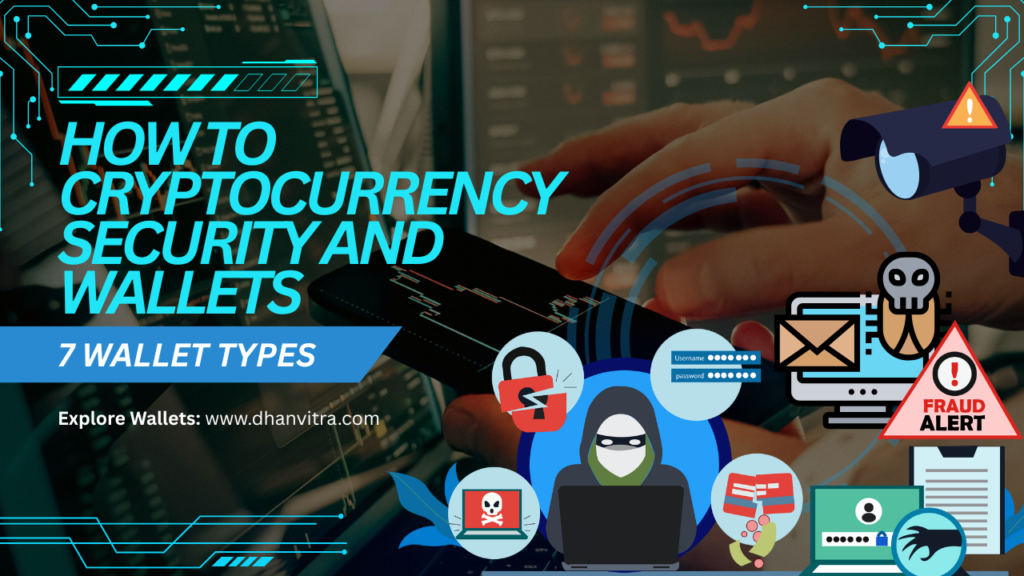
Welcome to Dhanvitra, your trusted space for smart, simple, and secure financial learning. As digital money reshapes the global economy, cryptocurrency has moved from a niche idea to a mainstream investment. But with freedom comes risk. That’s why understanding crypto security is no longer optional—it’s essential.
In this complete guide on How to Cryptocurrency Security and Wallets – 7 Types, we start with the most important foundation: security. Crypto works differently from banks. There is no helpline to reverse a mistake. If you lose access or get hacked, your funds may be gone forever.
At Dhanvitra, we believe crypto security should be easy to understand, even for beginners. No jargon. No fear. Whether you are buying Bitcoin for the first time or exploring advanced wallets, this guide is built for you.
We will break down how cryptocurrency security works, why wallets matter, and how hackers target users today. You’ll learn how to protect your digital assets using smart habits and the right tools. Think of it like learning to lock your digital vault before storing gold.
By the end of this guide, you’ll feel confident, informed, and in control. Let’s start with the basics of cryptocurrency security—and build your safety layer step by step.
What Is a Crypto Wallet?
Cryptocurrency wallets sound technical, but the idea is actually simple. Think of a wallet as your personal gateway to the blockchain world. It does not store coins like a leather wallet stores cash. Instead, it stores access to your crypto. That access is what really matters.
At its core, a crypto wallet helps you send, receive, and manage digital assets like Bitcoin, Ethereum, or stablecoins. It proves that the crypto on the blockchain belongs to you. Without a wallet, you cannot interact with crypto networks at all. This is why wallets are the foundation of cryptocurrency security.
Every wallet is built around cryptographic keys. One key is public, and one is private. The public key is like your email address. You can share it freely to receive crypto. The private key is like your email password. If someone gets it, they control your funds.
There are two broad ideas you should understand early. One is custodial wallets, where a company controls your private keys. The other is non-custodial wallets, where you control them yourself. This difference decides who truly owns your crypto. In crypto, control equals ownership.
How Cryptocurrency Security and Wallets Actually Work
A crypto wallet does not move coins from one place to another. Instead, it signs transactions on the blockchain. This is an important mindset shift. Your crypto always stays on the blockchain. Your wallet simply proves you are allowed to move it.
This signature tells the blockchain, “Yes, this transaction is approved by the owner.” The network checks the signature, not your identity. That is how trust works in decentralized systems.
Receiving crypto is even simpler. You share your public address, and someone sends funds to it. Your wallet then shows the balance by reading blockchain data. The wallet never “holds” the funds. It only reads and interacts with the blockchain ledger.
This design is powerful but unforgiving. If you lose your private key or recovery phrase, there is no reset button. No customer care. No forgot-password option. That is why wallet security is not about fear—it is about preparation.
7 Types of Cryptocurrency Wallets Explained
1. Hot Wallets
Hot wallets are always connected to the internet. They are designed for speed and convenience. If you trade often or make frequent payments, hot wallets feel smooth and fast.
These wallets are popular because they are easy to set up. You can install one on your phone or browser in minutes. They work well with DeFi apps, NFTs, and crypto games. This makes them perfect for daily use.
However, constant internet access also increases risk. Malware, phishing links, and fake apps often target hot wallets. The technology is strong, but the attack surface is wider. Hot wallets are best for small to medium amounts. Think of them like cash in your pocket.
2. Cold Wallets
Cold wallets stay completely offline. That single feature changes everything. No internet means hackers cannot reach them remotely. This is why cold wallets are considered highly secure.
These wallets are often used for long-term holding. Investors who plan to “buy and hold” prefer cold storage. It removes emotional trading and reduces risk at the same time.
Cold wallets require more effort to use. You cannot instantly connect them to apps or exchanges. This extra friction is actually a security benefit, not a flaw. If your goal is capital preservation, cold wallets are hard to beat. They are the digital version of a locked vault.
3. Hardware Wallets
Hardware wallets are physical devices built only for crypto security. They store private keys inside secure chips. When you make a transaction, the hardware wallet signs it internally. The private key never leaves the device. This design blocks most hacking attempts completely.
These wallets are popular among serious investors worldwide. They support multiple blockchains and thousands of tokens. Updates improve security without exposing keys.
Hardware wallets cost money, but they buy peace of mind. For large portfolios, they are often the smartest investment you can make.
4. Software Wallets
Software wallets are applications installed on mobile phones or desktops. They balance convenience and control. You own your keys, but the device stays online.
Mobile software wallets are great for everyday crypto use. They support QR codes, instant transfers, and DeFi access. Desktop wallets offer more control and advanced features.
Security depends heavily on your device hygiene. A clean system and official downloads matter a lot. One fake app can drain everything. Software wallets suit users who want flexibility without full cold storage. They sit comfortably between ease and responsibility.
5. Web Wallets
Web wallets run inside browsers or online platforms. You access them through websites or extensions. This makes them extremely easy to use from anywhere.
Many exchanges offer built-in web wallets. They simplify onboarding for beginners. You can trade and store crypto in one place.
The trade-off is trust. In many cases, the platform controls your private keys. If the service gets hacked or restricted, your access may disappear. Web wallets work best for short-term use. They are entry points, not final destinations for long-term storage.
6. Paper Wallets
Paper wallets are old-school but effective. They involve printing private keys or seed phrases on paper. No device, no software, no internet. This method removes digital attack risks completely. Hackers cannot steal what never touches a network. That simplicity is powerful.
Paper wallets demand physical care. Fire, water, or loss can destroy access forever. You must store them like important documents. They are best for deep cold storage. Use them carefully and sparingly in modern crypto setups.
7. Multi-Signature Wallets
Multi-signature wallets require more than one approval to move funds. Think of it as a digital joint account. One key alone is not enough. These wallets reduce single-point failure risks. Even if one key is compromised, funds remain safe. This is ideal for teams or families.
They are widely used by businesses and DAOs. Governance becomes transparent and secure. No single person has total control. Multi-signature wallets add complexity, but they raise security to another level. For high-value use cases, they are worth the setup effort.
How to Choose the Right Crypto Wallet
Choosing the right crypto wallet feels confusing at first, and that’s completely normal. The right wallet depends on how you use crypto, how much you hold, and how often you move your funds. Think of it like choosing between a daily-use wallet and a home safe. Both are useful, but for different reasons.
If you trade often, you need fast access. In that case, a secure mobile or desktop wallet makes sense. These wallets are easy to use and work well for daily transactions. But if you plan to hold crypto for months or years, cold storage is smarter. A hardware wallet keeps your assets offline, away from hackers and malware.
Your experience level also matters. Beginners should start with wallets that have simple interfaces and strong community support. Advanced users can explore wallets with custom fees, multi-chain support, and deeper security controls. The goal is comfort plus safety, not complexity for the sake of it.
Finally, always consider control. Non-custodial wallets give you full ownership of your private keys. That means freedom, but also responsibility. If you want full control, choose non-custodial. If convenience matters more, custodial wallets may work—but they come with trust risks.
Best Cryptocurrency Security Practices
Crypto security is not about fear. It’s about habits. Small, smart habits protect you more than expensive tools. The first rule is simple: never share your private key or recovery phrase. If someone does, it’s a scam.
Passwords deserve serious attention. Use long, unique passwords for wallets and exchanges. Avoid using the same password anywhere else. Add two-factor authentication wherever possible. It’s a small step, but it blocks most basic attacks instantly.
Backups are your safety net. Always write down your recovery phrase offline and store it in a safe place. Not on cloud storage. Not in screenshots. A physical backup protects you from device loss, app crashes, and accidents you don’t see coming.
Stay alert online. Fake apps, fake websites, and fake support accounts look real now. Always double-check URLs. Download wallets only from official sources. One careless click can drain your wallet in seconds.
Trending Crypto Security Threats
Crypto threats are evolving fast, and that’s the scary part. Today’s scams are smarter, cleaner, and harder to spot. AI-powered phishing attacks now create messages that look human and personal. These scams trick even experienced users.
Wallet-draining attacks are another rising threat. You connect your wallet to a fake DeFi site, approve a transaction, and boom—your funds are gone. These attacks don’t break wallets. They exploit trust and rushed decisions.
Fake wallet apps are also trending globally. Attackers clone popular wallets and publish them on unofficial app stores. Once installed, these apps silently steal private keys. This is why downloading from verified sources matters more than ever.
Social media scams continue to grow. Fake giveaways, impersonated influencers, and urgent messages push users to act fast. Scammers rely on emotion—excitement or fear. Slowing down is often your best defense.
Crypto Wallet Security for Beginners
If you’re new to crypto, security should feel simple, not scary. Start small. Don’t store large amounts until you understand how wallets work. Learn how sending, receiving, and backing up crypto feels before scaling up.
Use one wallet at a time. Managing multiple wallets too early increases confusion and mistakes. Choose a beginner-friendly wallet with clear instructions and good reviews. Simplicity reduces risk in the early stage.
Practice safe behavior from day one. Lock your phone. Update your apps. Avoid public Wi-Fi when accessing wallets. These basic steps create a strong foundation. Crypto security is built daily, not overnight.
Most importantly, take ownership seriously. In crypto, you are the bank. There is no reset button. But with awareness and calm habits, protecting your digital assets becomes second nature, not stress.
Crypto Wallet Security for Advanced Users
When you move beyond beginner level, crypto security stops being about basic passwords and starts becoming a mindset. Advanced users treat wallets like vaults, not apps. You don’t just protect access; you protect behavior, devices, and habits. This layered thinking is what separates long-term survivors from one-time winners in crypto.
Advanced users often split funds across multiple wallets instead of keeping everything in one place. Even if one wallet is compromised, total loss is avoided. This strategy is especially useful for high-value portfolios and long-term holders.
Device hygiene becomes critical at this level. You never sign transactions on a device used for random browsing or downloads. Many advanced users dedicate one clean laptop or phone only to crypto activity. No games. No social media. No shortcuts.
Another key practice is transaction verification discipline. You slow down before approving anything. You double-check wallet addresses, smart contract permissions, and network details. In crypto, speed kills and patience protects.
Finally, advanced users plan for the worst-case scenario. They prepare inheritance plans, secure recovery phrases offline, and test wallet recovery before trusting it. Security is not fear-based; it’s preparation-based.
Future of Cryptocurrency Security
The future of cryptocurrency security is moving fast, and it’s moving smart. Wallets are no longer just storage tools. They are becoming intelligent security systems that learn user behavior. This shift will reduce human error, which is still the biggest risk in crypto.
Biometric authentication is gaining ground globally. Fingerprints, facial recognition, and behavioral biometrics are being integrated into wallets. This adds convenience without sacrificing safety. It’s like replacing keys with fingerprints—harder to steal, easier to use.
Another major trend is smart contract permission control. Future wallets will warn users before signing risky approvals. They will explain risks in simple language. This is huge for DeFi users who often lose funds due to blind signing.
Quantum-resistant cryptography is also entering the conversation. While quantum threats are not immediate, blockchain developers are preparing early. Wallets of the future will be built to survive even next-generation computing power.
Most importantly, security is becoming user-friendly. Complex setups are being replaced with guided flows. The goal is simple: strong protection without confusing the user. The safer crypto becomes, the more global adoption we’ll see.
Conclusion
Cryptocurrency security is not a one-time setup. It’s an ongoing habit. Whether you are a beginner or an advanced user, your wallet reflects your discipline. The technology is powerful, but responsibility still sits with you.
Understanding the seven types of crypto wallets helps you choose wisely. Applying advanced security practices helps you stay safe long term. And keeping an eye on future trends keeps you ahead of threats, not behind them.
Crypto rewards those who respect it. Treat your wallet like your digital identity, not just a tool. Secure it thoughtfully, use it carefully, and your crypto journey will be far more confident and stress-free.
FAQs
What is the safest crypto wallet for advanced users?
There is no single “safest” wallet for everyone. Advanced users often combine hardware wallets with multisignature setups. This balance offers high security and controlled access. Safety depends more on how you use the wallet than the wallet itself.
Can advanced users still lose crypto despite strong security?
Yes, but losses usually come from human mistakes, not technological failure. Rushing transactions, trusting fake websites, or approving malicious contracts can bypass even strong setups. Awareness is just as important as tools.
Is multisignature wallet security worth the complexity?
For high-value holdings, yes. Multisig wallets reduce single-point failure risks. They are especially useful for businesses, DAOs, and long-term investors. The setup is complex, but the protection is strong.
How often should advanced users review wallet security?
You should review your security setup every few months. Threats evolve quickly in crypto. Updating firmware, checking permissions, and testing recovery keep your system reliable. Security is maintenance, not installation.
Will future crypto wallets remove the need for manual security steps?
They will reduce risk but not responsibility. Smart wallets will guide users better, but decision-making will still matter. Technology can assist, but awareness will always be your strongest defense.