
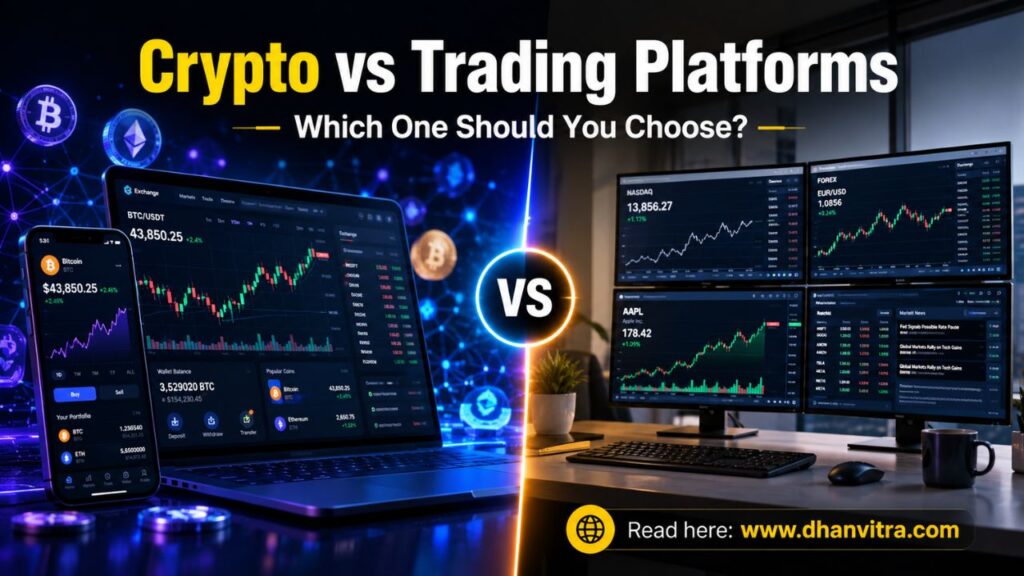
Money is moving faster than ever, and the platforms you choose can quietly shape every outcome of your investment journey. From crypto bull runs to volatile stock markets, today’s investors are no longer limited by access—but by clarity. The real challenge is not finding opportunities, but choosing the right gateway to act on them.
In this landscape, understanding Crypto Exchanges vs Trading Platforms is no longer optional—it’s essential. Both options promise access to financial markets, yet they operate very differently beneath the surface. At Dhanvitra, we’ve seen how even small misunderstandings at this stage can lead to costly mistakes, especially for beginners stepping into digital assets or multi-asset trading environments.
Consider a new investor exploring a crypto exchange’s list after hearing about Bitcoin’s rise, while also comparing trading platforms for beginners that offer stocks, forex, and crypto in one place. The decision isn’t just about convenience—it affects ownership, fees, and long-term strategy. Choosing between regulated crypto exchanges and modern multi-asset platforms can define whether you truly control your assets or simply gain exposure to price movements.
This guide breaks down everything that matters—from core differences to real-world use cases—so you can make a confident, informed decision. By the end, you’ll clearly understand where you stand in the debate of Crypto Exchanges vs Trading Platforms, and which option aligns best with your financial goals and risk appetite.
What Modern Traders Expect Today
The expectations of today’s traders have evolved far beyond just buying and selling assets. Whether someone is exploring crypto exchanges or comparing different trading platforms, they now look for a complete ecosystem that combines ease of use, transparency, and speed. Most users want platforms that feel intuitive from the first click, especially beginners who may feel overwhelmed by complex financial tools. A clean interface, simple onboarding, and clear instructions are no longer optional—they are essential.
Another major expectation is access to multiple asset classes in one place. Modern investors are not limiting themselves to just cryptocurrencies or stocks. They want flexibility. Many users actively search for trading platforms for crypto that also allow them to trade stocks, forex, or commodities. This shift reflects a broader trend toward diversified investing, where people want to manage their entire portfolio without switching between multiple apps.
Security and trust have also become central concerns. With frequent news around hacks and scams, users are more cautious than ever. They prefer trusted crypto exchanges or regulated platforms that offer strong safeguards such as two-factor authentication, cold storage, and transparent policies. Trust is built not just through features but also through consistent performance and clear communication.
Finally, modern traders expect speed and real-time execution. Delays, lagging charts, or poor mobile experiences can quickly drive users away. Today’s traders want platforms that keep up with market movements and allow them to act instantly. This growing demand for efficiency is shaping how both crypto exchanges and trading platforms compete and innovate.
What Is a Crypto Exchange?
A crypto exchange is a digital marketplace where users can buy, sell, and trade cryptocurrencies like Bitcoin, Ethereum, and many others. These platforms act as intermediaries that match buyers with sellers, making it easy for individuals to participate in the crypto market. When people explore a crypto exchange’s list, they are essentially comparing different platforms based on fees, supported coins, and overall reliability.
Centralized exchanges are the most common and are operated by companies that manage transactions and user accounts. These often rank among the most popular crypto exchanges because they offer better liquidity, faster transactions, and user-friendly interfaces. On the other hand, decentralized exchanges allow users to trade directly from their wallets without relying on a central authority, offering greater control but often at the cost of simplicity.
One of the defining features of crypto exchanges is ownership. When you buy cryptocurrency on many exchanges, you can withdraw it to your personal wallet, giving you full control over your assets. This is a key reason why experienced investors prefer safe crypto exchanges that allow easy withdrawals and strong asset security.
However, not all exchanges are equal. Factors such as regulation, security history, and trading volume matter significantly. Many users today focus on top crypto exchanges by volume because higher liquidity often leads to better pricing and smoother trades. Choosing the right exchange requires careful research and a clear understanding of your trading needs.
What Is a Trading Platform?
A trading platform is a broader financial tool that allows users to buy and sell various assets such as stocks, forex, commodities, and sometimes cryptocurrencies. Unlike crypto exchanges, these platforms often act as brokers, meaning they may not always give direct ownership of the underlying asset. Instead, they provide exposure to price movements, which is why they are widely used in traditional finance.
Most of the best online trading platforms are designed to offer a complete trading experience. This includes advanced charting tools, technical indicators, market insights, and even educational resources. For beginners, many platforms simplify the process with guided interfaces, making them popular as trading platforms for beginners who are just starting their financial journey.
Another key advantage of trading platforms is diversification. Users can access multiple markets from a single account, whether it’s stocks, forex, or derivatives. This is why many investors prefer top trading platforms that support a wide range of assets, allowing them to build and manage diversified portfolios without juggling multiple services.
However, there is an important distinction to understand. In some cases, especially with crypto, trading platforms may not provide actual ownership of the asset. Instead, users trade contracts or price-based instruments. While this can be convenient and efficient, it may not suit those who want full control over their digital assets. Understanding this difference is essential before choosing between a crypto exchange and a trading platform.
Crypto Exchanges vs Trading Platforms: Key Differences
| Feature | Crypto Exchanges | Trading Platforms |
|---|---|---|
| Primary Purpose | Designed specifically for buying, selling, and trading cryptocurrencies | Built for trading multiple assets like stocks, forex, commodities, and sometimes crypto |
| Asset Ownership | Users usually own actual cryptocurrencies and can withdraw to private wallets | Often no direct ownership; users trade price movements (CFDs or derivatives) |
| Asset Variety | Focused mainly on crypto assets (Bitcoin, altcoins, tokens) | Offers diversified assets including stocks, forex, bonds, and crypto |
| Ease of Use | Can be complex for beginners, especially advanced trading interfaces | Generally beginner-friendly with simple dashboards and guided tools |
| Popular Examples | Found in most crypto exchanges list, including top crypto exchanges globally | Includes best online trading platforms and multi-asset brokers |
| Fees Structure | Usually lower trading fees but may include withdrawal or network fees | May include spreads, commissions, or hidden charges depending on broker |
| Security & Control | Higher control over funds; users responsible for wallet security | Platform manages funds; less control but often more regulated |
| Regulation | Varies widely; some are regulated crypto exchanges, others are not | Typically more regulated, especially traditional financial platforms |
| Liquidity | High liquidity on largest crypto exchanges in the world | Liquidity depends on broker and asset class |
| Best For | Crypto-focused investors who want ownership and flexibility | Beginners and diversified investors looking for simplicity and multiple markets |
In the debate of Crypto Exchanges vs Trading Platforms, the choice ultimately depends on what kind of investor you are. If your goal is to own and control cryptocurrencies directly, crypto exchanges are the better fit. However, if you prefer a simpler interface and want to trade across multiple financial markets, trading platforms may offer a more convenient and structured experience.
Pros and Cons of Crypta Exchanges
| Aspect | Pros of Crypto Exchanges | Cons of Crypto Exchanges |
|---|---|---|
| Asset Ownership | You directly own cryptocurrencies and can transfer them to private wallets anytime. | Full responsibility lies with you; losing private keys means losing access to funds. |
| Variety of Assets | Access to a wide crypto exchanges list, including altcoins and new tokens. | Too many options can overwhelm beginners and increase risky investments. |
| Liquidity | Top crypto exchanges by volume offer high liquidity for fast buying/selling. | Smaller or new crypto exchanges may have low liquidity and price volatility. |
| Control & Flexibility | Complete control over funds, trading strategies, and withdrawals. | Requires technical understanding of wallets, gas fees, and order types. |
| Security Features | Many trusted crypto exchanges use cold storage, 2FA, and encryption. | Still vulnerable to hacks, phishing, and scams if users are careless. |
| Global Access | Available worldwide, including us crypto exchanges, Canadian and Australian platforms. | Regulations vary by country, leading to legal uncertainty in some regions. |
| Fees | Competitive trading fees on major exchanges. | Hidden costs like withdrawal fees and network charges can add up. |
Pros and Cons of Trading Platforms
| Aspect | Pros of Trading Platforms | Cons of Trading Platforms |
|---|---|---|
| Ease of Use | Designed for simplicity; ideal as trading platforms for beginners. | Limited customization for advanced or technical traders. |
| Multi-Asset Access | Trade stocks, forex, and crypto in one place using top trading platforms. | Crypto offerings may be limited compared to dedicated exchanges. |
| User Experience | Clean dashboards, mobile apps, and guided tools improve usability. | Over-simplification may hide important trading details. |
| Security | No need to manage private keys, reducing user error risk. | You may not fully control or own the underlying asset (especially crypto). |
| Fees Structure | Transparent fee models in many top online trading platforms. | Spreads, commissions, or inactivity fees can still impact returns. |
| Advanced Tools | Access to charts, analytics, and even copy trading platforms. | Many of the best online trading platforms are highly regulated. |
Best Use Cases: Which One Fits Your Goals?
| User Goal / Scenario | Crypto Exchanges | Trading Platforms |
|---|---|---|
| Long-Term Crypto Investing | Best choice for holding and owning crypto assets securely. | Not ideal if you want full ownership of coins. |
| Beginner-Friendly Investing | Can be complex for new users. | Better suited due to simple interface and guidance tools. |
| Diversified Portfolio (Stocks + Crypto) | Limited to crypto assets only. | Ideal for multi-asset investing across stocks, forex, and crypto. |
| Active Trading & Short-Term Gains | Great for crypto-focused trading with high liquidity. | Useful for broader strategies including forex and options trading. |
| Access to New Coins | Early access via new crypto exchanges and token listings. | Limited exposure to newly launched cryptocurrencies. |
| Security & Regulation Priority | Depends on platform; choose regulated crypto exchanges carefully. | Generally safer due to stronger regulatory frameworks. |
| Control Over Funds | Full control with wallet transfers and private keys. | Limited control; platform manages custody of assets. |
| Global Accessibility | Widely accessible across countries. | Some restrictions based on region (e.g., us trading platforms rules). |
Safety, Regulations, and Trust Factors
Safety is one of the most important considerations when choosing where to invest your money. Whether you are using crypto exchanges or trading platforms, understanding how your funds are protected can prevent costly mistakes. In recent years, both industries have made significant improvements, but the level of safety still varies widely between providers.
Crypto exchanges operate in a mixed regulatory environment. Some of the most trusted crypto exchanges follow strict compliance rules, including identity verification and anti-money laundering standards. These platforms often store a large portion of user funds in cold wallets, which are offline and less vulnerable to hacking. However, not all exchanges meet these standards, especially newer or lesser-known ones.
Trading platforms, especially those offering stocks or forex, are typically more regulated. Many of the trading platforms and global providers operate under financial authorities that enforce strict rules on fund protection and transparency. This adds an extra layer of trust for users, particularly beginners who may not fully understand the risks involved in digital asset storage.
Trust also comes down to reputation and track record. Before choosing any platform, it’s important to research user reviews, security history, and regulatory status. Look for platforms that are widely recognized, have strong customer support, and maintain transparency in their operations. In finance, trust is built over time, and choosing the right platform is a key step toward protecting your investments.
Key Features to Compare Before Choosing
When comparing Crypto Exchanges vs Trading Platforms, the real difference often comes down to the features that directly impact your daily experience as a user. Many beginners focus only on brand names or popularity, like looking at a crypto exchange’s list or browsing top trading platforms, but what truly matters is how well a platform fits your needs. The right choice should feel simple, transparent, and aligned with your financial goals.
Crypto exchanges often charge trading fees, withdrawal fees, and sometimes hidden spreads, while many trading platforms bundle costs into pricing. It’s important to look beyond “low fees” marketing and understand the actual cost of each transaction. For example, some of the most popular crypto exchanges offer competitive rates but may charge higher withdrawal fees, which can affect long-term investors.
Security is another non-negotiable factor. Whether you are using safe crypto exchanges or regulated trading platforms, features like two-factor authentication, cold storage, and insurance coverage can significantly reduce risk. In today’s environment, where cyber threats are real, choosing a platform with strong security practices is just as important as choosing one with low fees.
Finally, consider usability and support. The best platforms, especially trading platforms for beginners, offer clean interfaces, fast mobile apps, and responsive customer support. If a platform feels confusing or slow, it can lead to costly mistakes. A good platform should make your investing journey smoother, not more complicated.
Expert Tips to Choose the Best Platform for You
Choosing between Crypto Exchanges vs Trading Platforms becomes much easier when you approach it with a clear strategy instead of guesswork. Many investors jump into the top 10 crypto exchanges or sign up for the best online trading platforms without understanding what they actually need. A better approach is to match the platform with your experience level, goals, and risk tolerance.
Start by defining your purpose. If your goal is to buy and hold crypto assets long-term, then exploring trusted crypto exchanges with strong security and withdrawal options makes sense. On the other hand, if you want to actively trade across markets like stocks, forex, or crypto, then multi-asset trading platforms for crypto may offer better tools and flexibility. Clarity here saves you from switching platforms later.
Next, test before committing fully. Many experienced investors recommend starting with a small amount. This allows you to understand how the platform works in real conditions—how fast orders execute, how withdrawals are processed, and how reliable the system feels. Even some of the largest crypto exchanges can have occasional delays, so real experience matters more than reviews.
Lastly, think long-term. Your chosen platform should grow with you. Today, you might be a beginner, but over time, you may need advanced tools, analytics, or diversification into other assets. Choosing from the top online trading platforms that offer scalability ensures you won’t need to migrate your funds and relearn everything later.
Conclusion: Making the Right Choice for Your Financial Journey
The debate around Crypto Exchanges vs Trading Platforms is not about which one is universally better—it’s about what works best for you. Both options serve different purposes, and understanding that difference is what helps you make a confident, informed decision. In today’s fast-evolving financial world, having the right platform is just as important as choosing the right investment.
If you prefer direct ownership of digital assets and want access to a wide list of crypto exchanges, then crypto exchanges are a natural fit. They give you more control and flexibility, especially if you are focused purely on crypto. However, this control also comes with responsibility, including managing security and understanding how transactions work.
On the other hand, if you value simplicity, regulation, and access to multiple asset classes, then top trading platforms or online stock trading platforms can offer a more structured experience. These platforms are often better suited for beginners or investors who want everything in one place without dealing with technical complexities. Take your time, start small, and focus on learning as you go. A thoughtful decision today can make your financial journey smoother and more rewarding in the long run.
Frequently Asked Questions
What is the main difference between a crypto exchange and a trading platform?
A crypto exchange allows you to directly buy, sell, and own cryptocurrencies, giving you full control over your assets. A trading platform, on the other hand, often acts as a broker, letting you trade price movements across assets like stocks, forex, or crypto without always owning the underlying asset.
Which is better for beginners: a crypto exchange or a trading platform?
For most beginners, trading platforms are easier to start with because they offer simple interfaces, guided tools, and customer support. Crypto exchanges can feel more complex at first, especially when managing wallets and security, but they offer more control once you understand the basics.
Are crypto exchanges safer than trading platforms?
Safety depends on the platform, not just the category. Regulated trading platforms generally offer more built-in protection, while safe crypto exchanges rely on strong security measures like cold storage and encryption. Choosing trusted and regulated options is key in both cases.
Can I trade stocks and crypto on the same platform?
Yes, many modern trading platforms allow you to trade multiple asset classes, including stocks, forex, and crypto, from a single account. These are often called multi-asset platforms and are ideal for investors who want diversification without managing multiple accounts.
Do I actually own crypto on trading platforms?
In many trading platforms, you don’t directly own the cryptocurrency. Instead, you trade its price through contracts or derivatives. If ownership matters to you, using crypto exchanges is usually the better option.
What are the safest crypto exchanges in the world?
The safest crypto exchanges are typically well-established, regulated, and have strong security systems in place. Examples often include some of the most trusted crypto exchanges with high trading volume, transparent policies, and a strong reputation among global users.











Hey everyone! 🌟 I’ve been diving into the world of crypto exchanges and trading platforms lately, and it’s fascinating how each has its perks. What’s your go-to choice? Let’s share our experiences! 🚀
Great discussion topic! I think it really depends on what you’re looking for—some exchanges have lower fees, while others offer more coins. What features matter most to you? 💰✨
I love how different crypto exchanges cater to various needs! Whether you’re a newbie or a pro, there’s something for everyone. Which platform do you find the most user-friendly? 🤔💬
I’ve been exploring both sides of the coin—exchanges vs trading platforms—and it’s tough to pick a favorite! Each has unique benefits that suit different styles. Would love to hear your thoughts! 🧐💭
So interesting to see how crypto exchanges and trading platforms stack up against each other! I personally prefer one that has a great app for on-the-go trading. What about you guys? 📱💖