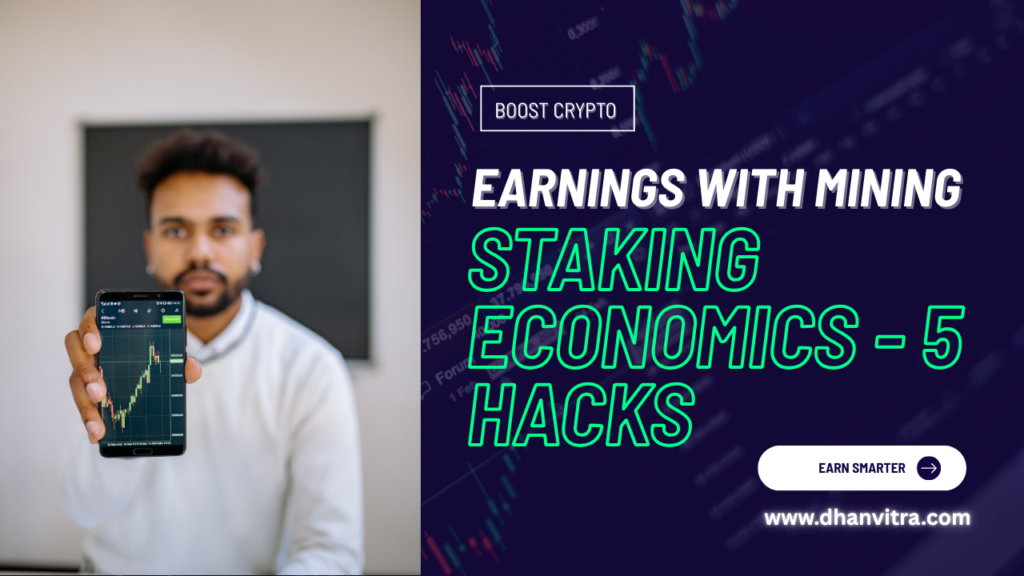
Crypto mining and staking economics sound complex at first, but once you break them down, they’re easier than you think. At the core, both are ways to earn crypto by supporting blockchain networks. Mining uses computing power to validate transactions, while staking locks your coins to help secure the network. If your goal is to boost earnings from crypto mining and staking, understanding how rewards, costs, and risks work is non-negotiable. This is where smart platforms like Dhanvitra come into the picture, helping users learn, plan, and optimize their crypto income strategies with clarity.
When we talk about crypto mining profitability for beginners, economics matter more than hardware hype. Mining rewards depend on factors like network difficulty, block rewards, electricity costs, and coin price. A miner earning well today may struggle tomorrow if costs rise or rewards drop. That’s why modern miners focus on efficiency, not just power. By using insights and tools highlighted on Dhanvitra, users can better understand cost-to-reward ratios and choose mining paths that make sense in real-world conditions, not just on paper.
On the other side, crypto staking economics explained simply shows why staking is often called passive income. You stake coins, support the network, and earn rewards over time. But returns vary based on lock-up periods, validator performance, and inflation rates. Some staking options look attractive but quietly reduce real profits due to high token inflation. Educational resources like Dhanvitra help users compare staking models, understand true APY vs advertised APY, and avoid traps that hurt long-term earnings.
A big advantage of learning mining vs staking economics in crypto is knowing when to choose which method. Mining suits users with technical skills and low energy costs, while staking works better for long-term holders who value stability. For example, during market downturns, staking often offers more predictable returns than mining. Platforms such as Dhanvitra bridge this knowledge gap by breaking down complex economic concepts into simple, actionable insights anyone can follow.
Ultimately, mastering crypto mining and staking economics for long-term income is about informed decisions, not guesswork. The crypto space rewards those who learn continuously and adapt fast. With clear explanations, practical examples, and finance-focused credibility, Dhanvitra positions itself as a reliable resource for anyone serious about earning smarter in crypto. If you want sustainable returns instead of short-lived hype, understanding the economics is your strongest advantage—and Dhanvitra helps you get there.
Why Crypto Earnings Are Not Just About Luck
Many people think crypto earnings depend on luck, timing, or insider tips. That idea sounds exciting, but it’s mostly wrong. In reality, consistent crypto income comes from understanding systems, numbers, and behavior. Luck may help once, but it never builds long-term results.
Crypto mining and staking work on clear rules written into code. Block rewards, network difficulty, staking yields, and inflation rates all follow logic. When you understand these mechanics, you stop guessing and start planning. That’s when earnings become predictable instead of random.
Think of crypto like farming, not gambling. A farmer doesn’t rely on luck alone. They study the soil, choose the right crop, and manage resources. In the same way, profitable crypto users study networks, costs, and rewards before committing money or time.
Global trends also matter more than luck. Energy prices, regulatory news, protocol upgrades, and adoption rates directly affect profitability. People who track these trends earn more than those who chase hype on social media.
In short, crypto rewards those who think long-term. Strategy beats chance every time. When you treat mining and staking as economic systems, not lottery tickets, earnings become intentional.
Understanding the Difference Between Mining and Staking
Crypto mining and staking often get mixed up, but they are fundamentally different. Mining is about competition. Staking is about participation. Both can earn rewards, but they require different mindsets and resources.
Mining uses computing power to secure a blockchain. Miners solve cryptographic puzzles, and the fastest or most powerful setup wins the reward. This model works best when you manage hardware costs, electricity, and heat efficiently.
Staking, on the other hand, uses locked coins instead of machines. You stake tokens to help validate transactions and keep the network secure. In return, you earn passive rewards. It feels more like earning interest than running hardware.
Mining is more active and operational. Staking is more financial and strategic. Mining favors people who optimize infrastructure. Staking favors those who understand token economics and lock-up periods.
Choosing between mining and staking depends on your capital, location, and risk tolerance. Both models can be profitable, but only if you understand how they actually work.
Hack #1: Choosing the Right Cryptocurrency for Mining and Staking
Not all cryptocurrencies are worth mining or staking. This is where many beginners lose money. Popular coins may look attractive, but high competition often kills profits. Smart earners focus on long-tail opportunities.
For mining, network difficulty matters more than brand name. A smaller but growing blockchain can be far more profitable than a famous one. Lower difficulty means less competition and better reward-to-cost ratios.
For staking, reward structure and token inflation are critical. High-staking APY looks great on paper, but heavy inflation can reduce real value. Sustainable staking income comes from balanced tokenomics, not extreme rewards.
Trending topics like modular blockchains, layer-2 networks, and AI-integrated protocols are changing mining and staking economics. Early participation in solid projects often brings higher returns than chasing established giants.
The key is research, not hype. When you choose the right cryptocurrency based on data, not emotion, earnings grow naturally.
Hack #2: Optimizing Hardware and Infrastructure Costs
Hardware and infrastructure are silent profit killers. Many miners focus only on rewards and forget expenses. That’s a costly mistake. In crypto, reducing costs often matters more than increasing rewards. Efficient hardware wins over powerful hardware. A slightly slower machine with low energy use can outperform a high-end setup with massive electricity bills. Profit comes from net income, not raw hash power.
Electricity costs vary globally, and smart miners adapt. Some mine during off-peak hours. Others relocate setups or use renewable energy. Infrastructure flexibility directly impacts long-term profitability. Cooling, maintenance, and downtime also matter. A stable setup earns more over time than an aggressive one that burns out quickly.
The same logic applies to staking infrastructure. Self-hosted nodes require uptime, security, and monitoring. If done poorly, rewards drop. Optimization turns average setups into consistent earners.
Hack #3: Smart Staking Strategies for Passive Income
Staking looks simple on the surface. Lock coins, earn rewards, relax. But smart staking is where passive income turns serious. The difference comes from strategy, not luck. If you stake without a plan, you earn average returns. If you stake with intent, you earn consistently.
The first smart move is choosing networks with sustainable rewards. High APY sounds exciting, but extreme yields often collapse. Focus on staking coins with real usage, strong developers, and active communities. Trending long-tail keywords like best staking crypto for long-term income matter here because long-term health beats short-term hype.
Another key trick is understanding lock-up periods. Flexible staking gives freedom but lower rewards. Locked staking offers higher returns but limits access. The smart approach blends both. Keep part of your funds flexible for opportunities and lock the rest for stable growth. Think of it like keeping cash and fixed deposits together.
Compounding is where magic happens. Reinvesting staking rewards increases returns quietly but powerfully. Many platforms now support auto-compounding. This small feature can boost earnings over months without extra effort. It’s passive income doing its job while you sleep.
Validator selection also matters. Choosing reliable validators reduces slashing risks and downtime losses. This is a quiet but critical part of smart staking that beginners often miss.
Hack #4: Timing the Market Without Trading
Most people think timing the market means day trading. That’s not true. Mining and staking allow timing without charts, stress, or constant screen watching. This is about understanding cycles, not predicting prices.
Crypto networks run on reward cycles. Block rewards, staking yields, and difficulty levels change over time. Mining or staking during lower participation phases often increases rewards. When hype fades, smart earners step in. This long-tail concept aligns with crypto mining profitability, timing, and the best time to stake crypto.
Network events matter more than price candles. Halvings, protocol upgrades, and staking reward adjustments shift economics. Preparing before these events often leads to better yields. You’re positioning, not speculating.
Seasonal behavior also plays a role. During bear markets, fewer users stake or mine. Rewards per participant often rise. During bull markets, rewards dilute due to heavy participation. Timing your entry based on participation levels helps maximize passive income.
Holding through volatility is another silent strategy. Instead of selling rewards instantly, some cycles reward patience. Accumulating during low sentiment phases can amplify future value. This isn’t trading. It’s strategic waiting with purpose.
Hack #5: Risk Management and Portfolio Diversification
Crypto rewards are attractive, but unmanaged risk eats profits fast. Smart earners don’t chase maximum returns. They protect capital first. Risk management keeps you in the game long enough to win.
Diversification is your first shield. Staking or mining only one coin exposes you to protocol failure, hacks, or reward cuts. Spreading assets across different networks reduces shock impact. This supports keywords like safe crypto passive income methods and low-risk staking strategy.
Platform risk matters too. Centralized staking platforms offer ease but carry custody risk. Decentralized staking gives control but needs more responsibility. A balanced mix lowers exposure. Never place all funds in one wallet, one platform, or one chain.
Reward volatility is another risk. High yields often drop suddenly. Balancing high-yield assets with stable networks creates smoother income. Think of it like balancing fast-growing stocks with steady bonds.
Finally, always plan for exits. Know when and how you can unstake or withdraw. Liquidity access during emergencies protects both capital and peace of mind. Risk management is not fear. It’s discipline.
Taxation, Regulations, and Global Considerations
Crypto income is not invisible anymore. Governments worldwide are paying attention. Ignoring taxes and regulations can wipe out gains faster than any market crash.
Staking and mining rewards are usually treated as income. In many countries, rewards are taxable at the time of receipt. Later selling them may trigger capital gains tax. This makes tracking rewards essential, especially for long-term strategies.
Rules vary globally. Some regions encourage crypto innovation. Others impose strict compliance. Understanding local laws protects earnings. Trending searches like crypto staking tax rules by country show how important this topic has become.
Using simple record-keeping tools helps. Track reward dates, values, and transaction history. This saves stress during tax season. Clean records also support future audits or regulatory changes.
Regulations evolve fast. What’s allowed today may change tomorrow. Staying informed keeps strategies flexible. Smart crypto earners treat compliance as part of profitability, not a burden.
Common Mistakes That Kill Crypto Earnings
One of the biggest mistakes people make in crypto mining and staking is chasing hype instead of understanding fundamentals. Many jump into trending coins without checking network difficulty, reward structure, or long-term utility. This is how profits quietly bleed out. If you don’t know why a coin pays rewards, you won’t know when those rewards will shrink. Smart earnings start with clarity, not excitement.
Another earnings killer is ignoring operational costs, especially electricity and platform fees. Globally, power prices vary, and many miners forget to calculate real costs before starting. On the staking side, high APY often hides lock-in risks or slashing penalties. When rewards look too good, they usually come with strings attached. Sustainable crypto income always respects costs first.
A very common error is emotional decision-making during market volatility. People panic-stop mining or unstake assets at the worst possible time. Crypto rewards work best when patience leads the way. Mining and staking reward consistency, not impulsive moves. Think marathon, not sprint.
Security negligence is another silent profit killer. Using unknown pools, unsafe wallets, or centralized platforms without research invites losses. One exploit or platform freeze can erase years of earnings. In crypto, protecting capital is more important than chasing yield. No security means no profit.
Future Trends in Crypto Mining and Staking Economics
The future of crypto mining is shifting toward energy efficiency and smarter resource use. Globally, miners are moving to renewable energy and low-power hardware to stay profitable. Networks are also adjusting reward mechanisms to discourage waste. This means mining will become more strategic, not brute-force. Those who adapt early will earn more with less effort.
Staking is evolving into a core pillar of blockchain economics. More networks are adopting Proof of Stake and hybrid models to improve scalability. This creates long-term passive income opportunities for everyday users. Staking is becoming simpler, safer, and more flexible. It’s slowly turning into crypto’s version of digital interest income.
Liquid staking is another trend gaining serious traction. It allows users to stake while still using their assets in DeFi ecosystems. This unlocks double utility and better capital efficiency. For global investors, this means earning without locking funds completely. Flexibility will define the next phase of staking rewards.
Regulation will also shape future earnings. Clearer global rules will reduce scams and improve trust. While some fear regulation, it often brings stability. Stable systems attract more users, which strengthens networks. Strong networks usually reward participants better.
Final Thoughts: Building Sustainable Crypto Income
Crypto mining and staking are not get-rich-quick schemes. They are systems that reward discipline, research, and long-term thinking. If you treat them like a business, results improve naturally. Sustainable crypto income grows slowly but steadily.
The smartest earners focus on efficiency, not just rewards. They optimize costs, diversify assets, and stay informed. They don’t panic during dips or blindly follow trends. Instead, they build systems that work in any market.
Global crypto opportunities are expanding fast. Anyone can participate, regardless of location. The key is understanding the economics behind the rewards. When knowledge leads the way, earnings follow.
Crypto is still young. Those who learn today position themselves for tomorrow. The real hack is patience mixed with strategy.
FAQs
What is the biggest mistake beginners make in crypto mining and staking?
Most beginners focus only on rewards and ignore costs, risks, and network fundamentals. This leads to lower real profits. Understanding economics first changes everything.
Is staking safer than mining for long-term income?
Staking usually involves lower upfront costs and less technical complexity. However, safety depends on network design and platform choice. Both can be profitable if managed wisely.
Can crypto mining still be profitable globally in 2026?
Yes, but only with efficient hardware, low energy costs, and smart coin selection. Profitability is now about strategy, not scale.
How do future trends affect small crypto investors?
Trends like liquid staking and energy-efficient mining favor small participants. They lower barriers and increase flexibility. This opens doors globally.
What is the best way to build sustainable crypto passive income?
Combine mining or staking with diversification, security awareness, and long-term planning. Avoid hype. Focus on systems that survive market cycles.