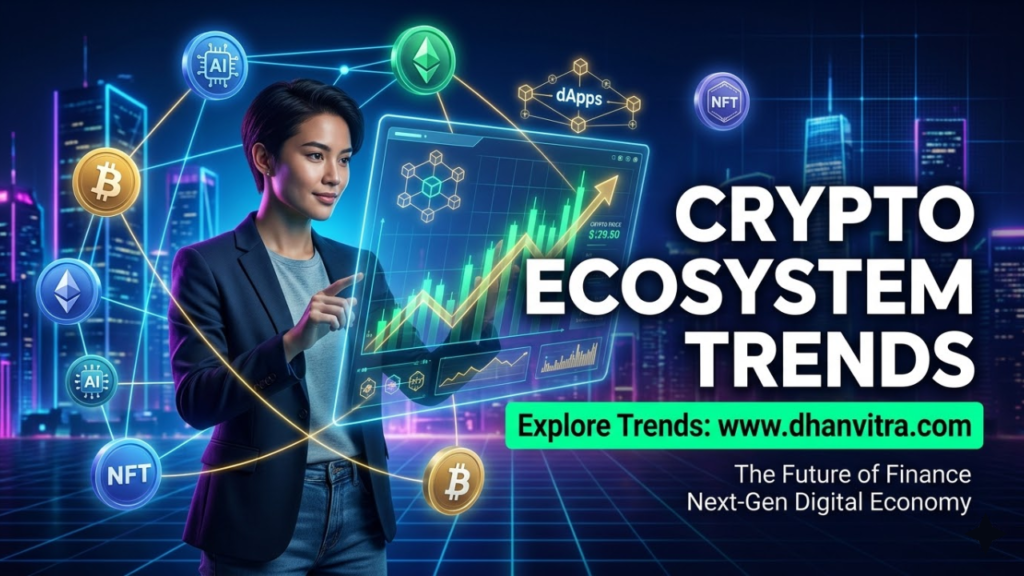
The rapid growth of the crypto ecosystem is no longer just a trend—it’s a global shift in how people think about money, ownership, and technology. Millions of users across the globe are moving from traditional banking systems to decentralized platforms. What makes this shift so powerful is its accessibility. Anyone with a smartphone and internet can now participate in financial systems that were once limited to banks and institutions. Platforms like Dhanvitra help simplify this complex space, making it easier for beginners and investors to understand and act on emerging opportunities.
When we talk about the crypto ecosystem growth trends, we’re not just talking about Bitcoin or Ethereum anymore. The ecosystem now includes decentralized finance (DeFi), NFTs, Web3 applications, and blockchain-based identity systems. Imagine a world where you don’t need a bank to send money, a lawyer to verify ownership, or a middleman to manage transactions. That’s what crypto is building. A simple use case? Sending money from India to the US used to take days and include high fees. With crypto, it can happen in minutes at a fraction of the cost. This kind of efficiency is driving adoption and pushing innovation at lightning speed.
Another key reason behind the global adoption of cryptocurrency technology is trust and transparency. Traditional systems often rely on centralized control, which can lead to delays, hidden fees, or even corruption. Blockchain, the technology behind crypto, works like a public ledger that anyone can verify. It’s like a digital notebook that no one can secretly change. This builds trust among users. Businesses are now using blockchain for supply chain tracking, healthcare records, and even voting systems. As more industries adopt this technology, the crypto ecosystem continues to expand beyond just finance.
The benefits of the crypto ecosystem for beginners and investors are also becoming clearer every day. You don’t need a huge investment to get started. Micro-investing, staking, and earning passive income through DeFi platforms are now common strategies. For example, instead of letting money sit in a low-interest bank account, users can earn higher returns by participating in decentralized lending platforms. Of course, risks exist, but with the right knowledge and tools—like insights and guides from Dhanvitra—users can make informed decisions and avoid common mistakes.
Looking ahead, the future of blockchain and cryptocurrency adoption seems unstoppable. Governments are exploring digital currencies, companies are integrating crypto payments, and developers are building the next generation of the internet—Web3. If you want to stay ahead in this fast-moving space, understanding the basics today is your biggest advantage. Platforms like Dhanvitra are positioning themselves as trusted guides, helping users navigate this complex yet exciting ecosystem with confidence and clarity.
Crypto Ecosystem Explodes: 5 Trends
The crypto ecosystem is no longer a small space for tech lovers or traders. It has become a global movement that touches finance, gaming, business, and even everyday life. You can see new ideas coming out almost every week. This fast growth makes people curious and sometimes confused. But if you slow down and look closely, you will notice clear patterns shaping the future.
Right now, the market is not just about buying and selling coins. It is about building systems that can replace traditional banks, contracts, and even jobs. Big companies and governments are also paying attention. They are investing money and testing real use cases. This shows that crypto is moving from hype to real-world impact.
The honest answer is no. We are still early in many areas. New trends are opening doors for beginners and experts alike. If you understand these trends, you can stay ahead and make better decisions.
So let’s break down two powerful trends that are changing everything right now. These are not just buzzwords. They are real shifts that are shaping the future of digital finance.
Trend #1 – Rise of Real-World Asset (RWA) Tokenization
Real-World Asset tokenization is changing how we see ownership. Imagine turning physical assets like property, gold, or even art into digital tokens on a blockchain. That is exactly what RWA does. It makes real assets easier to trade, divide, and access from anywhere in the world. You no longer need to be rich to invest in big assets.
This trend is growing fast because it solves a real problem. Traditional investments often need a lot of money and paperwork. But with tokenization, you can buy a small share of an asset with just a few clicks. It feels similar to owning shares in a company, but now you can own parts of real estate or rare items. This opens doors for millions of people globally.
Another big reason behind this trend is trust and transparency. Blockchain records every transaction clearly. This reduces fraud and builds confidence among investors. People can verify ownership without depending on middlemen. That is a huge shift from traditional systems.
RWA tokenization is also attracting big institutions. Banks, hedge funds, and even governments are exploring it. They see it as a way to bring more liquidity into the market. When large players enter, it adds credibility and stability. This is why many experts believe this trend will dominate the next phase of crypto growth.
Trend #2 – Layer 2 Scaling Solutions Enter the Mainstream
Layer 2 solutions are solving one of the biggest problems in crypto: slow speed and high fees. If you have ever used a blockchain like Ethereum, you may have noticed delays or expensive transactions. Layer 2 fixes this by processing transactions outside the main chain. It then updates the main chain later, making everything faster and cheaper.
Think of Layer 2 like a fast lane on a highway. The main blockchain is the regular road, and it can get crowded. Layer 2 creates extra space so traffic flows smoothly. This improves user experience and makes crypto more practical for daily use. People can send money, trade, or use apps without worrying about high costs.
This trend is becoming mainstream because demand is growing. More users are joining crypto every day. Without scaling solutions, networks would struggle to handle the load. Layer 2 helps blockchains grow without breaking. That is why many popular projects are adopting it quickly.
Developers also love Layer 2 because it allows them to build better apps. They can create faster and more efficient platforms for gaming, finance, and social media. This leads to more innovation and better products for users. As adoption increases, Layer 2 will become a standard part of the crypto ecosystem.
Trend #3 – AI and Blockchain Integration
You are now seeing a powerful shift where AI and blockchain integration in crypto is no longer just hype. It is becoming real and useful in daily applications. Imagine a system where artificial intelligence can analyze huge amounts of data instantly, while blockchain keeps that data safe and transparent. That combination creates trust and intelligence together. It feels like giving a brain to a system that already has a strong memory.
When you look closer, AI in crypto trading and automation is one of the fastest-growing areas. AI tools can predict patterns, manage risks, and even execute trades faster than humans. At the same time, blockchain ensures that these actions remain secure and tamper-proof. This reduces fraud and builds confidence among users. For global investors, this means smarter decisions without depending fully on guesswork.
Another exciting area is decentralized AI marketplaces and data sharing. Big tech companies used to control data, but now blockchain allows users to own and share their data securely. AI models can train on this data without exposing personal information. You stay in control while still benefiting from advanced technology. This creates a fair system where both developers and users win.
You should also watch how AI-powered smart contracts and automation are changing industries. These contracts can adapt and learn over time, making them more flexible than traditional code. For example, they can adjust based on market conditions or user behavior. The future of crypto will not just be decentralized—it will be intelligent.
Trend #4 – Decentralized Finance (DeFi) Evolution
The world of DeFi evolution and future trends is moving far beyond simple lending and borrowing. In the early days, people were excited about earning high yields through farming. But now, the focus has shifted toward real-world utility and sustainability. DeFi platforms are becoming more stable, more user-friendly, and more useful in everyday finance.
You will notice that next-generation DeFi platforms are solving real problems like cross-border payments and financial access. People in different parts of the world can now send money instantly without banks. This is huge, especially in regions where traditional banking is limited. DeFi is slowly becoming a global financial alternative, not just a niche experiment.
Security has always been a concern, but DeFi security improvements and regulations are making things better. Developers are building stronger smart contracts and using audits to reduce risks. Governments are also starting to create clearer rules. While regulation may sound restrictive, it actually builds trust and attracts more users and institutions into the space.
Another major shift is the rise of real yield and sustainable DeFi models. Instead of relying on hype, platforms are focusing on actual revenue generation. This means users earn rewards based on real economic activity, not just token inflation. It makes the system healthier and long-lasting. DeFi is growing, and you can see it becoming more practical every day.
Trend #5 – Growth of Web3 Gaming and the Metaverse
The rise of Web3 gaming trends and metaverse development is changing how people interact with digital worlds. Earlier, games were just for entertainment. Now, they are becoming full economies where players can earn, trade, and own assets. It feels like stepping into a virtual universe where your time and effort actually have value.
One big shift you will notice is the move from play-to-earn to play-and-earn gaming models. Earlier, many games focused only on earning, which made them feel repetitive. Now, developers are focusing on fun first, with earning as a bonus. This makes games more engaging and sustainable. Players stay longer because they enjoy the experience, not just the rewards.
The concept of digital ownership through NFTs in gaming is also gaining strong momentum. When you buy an in-game item, you truly own it. You can sell it, trade it, or even use it in different games. This creates a new level of freedom for players. It is like owning property in a digital world that keeps growing.
Looking ahead, the future of metaverse economies and virtual worlds looks massive. Big brands, creators, and developers are building immersive experiences where people can work, play, and socialize. Imagine attending events, running businesses, or meeting friends in a virtual space. This is not science fiction anymore. It is slowly becoming a part of everyday life, and you are right in the middle of this transformation.
Global Impact of These Crypto Trends
The global crypto ecosystem growth is changing how people think about money, ownership, and trust. You are no longer limited by banks or borders when sending or receiving funds. In countries with unstable currencies, crypto offers a lifeline that feels faster and more reliable. This shift is not just technical; it is deeply human because it gives people more control over their financial lives.
If you look closely, crypto adoption worldwide is rising in both developed and developing regions. In places like Africa and Southeast Asia, people use crypto for daily transactions and remittances. At the same time, large institutions in the US and Europe are investing heavily in blockchain technology. This mix of grassroots use and corporate interest shows how powerful and flexible the crypto ecosystem has become.
Another big impact comes from real-world asset tokenization trends and decentralized finance. Imagine owning a fraction of real estate in another country with just a few clicks. That idea is now real, and it is opening global markets to everyday investors. It feels like the financial world is becoming more open, where anyone with internet access can participate.
The rise of Web3, AI blockchain integration, and metaverse economies is also shaping digital culture. People are working, gaming, and socializing in virtual spaces where digital assets have real value. This creates new jobs, new income streams, and new ways to connect across borders. The global economy is slowly blending with the digital one, and that line keeps getting thinner every day.
Risks and Challenges in the Crypto Boom
While the crypto market trends for 2026 look exciting, they come with serious risks that you should not ignore. Prices can move very fast, sometimes within minutes, and that can lead to heavy losses. Many new investors enter the market without proper knowledge, hoping for quick profits. This often leads to emotional decisions, which rarely end well.
Security is another major concern in the blockchain and crypto ecosystem. Hacks, scams, and phishing attacks are still common, even with better technology. If you are not careful with your private keys or wallets, you can lose your assets forever. Unlike traditional banking, there is usually no customer support to recover lost funds.
Regulation also plays a big role in shaping the future of crypto. Governments around the world are still figuring out how to control or support this space. Some countries welcome crypto innovation, while others restrict or ban it. This uncertainty can affect market stability and long-term growth, making it harder for users and businesses to plan.
There is also the issue of scalability and environmental impact. Even though Layer 2 solutions are improving speed and cost, not all blockchains are efficient yet. Some networks still consume a lot of energy, which raises concerns about sustainability. These challenges show that while crypto is powerful, it still needs time to mature and become more stable.
Conclusion
The future of cryptocurrency and blockchain technology feels both exciting and unpredictable at the same time. You are witnessing a shift that could redefine how the world handles money, data, and digital ownership. From DeFi to AI integration, every trend points toward a more decentralized and connected system. It is like watching a new digital economy being built in real time.
What makes this space unique is how fast it evolves. New projects, ideas, and innovations appear almost every day. If you stay informed and curious, you can spot opportunities early and avoid common mistakes. The key is not to chase hype but to understand the real value behind each trend.
At the same time, balance is important. You should approach crypto with a mix of excitement and caution. Learning the basics, managing risks, and staying updated can make a huge difference. Think of crypto not as a gamble but as a long-term shift in how the world operates.
The crypto ecosystem explosion is not just a trend; it is a transformation. Whether you are an investor, creator, or casual user, this space will likely affect you in some way. The question is not if it will impact you, but how prepared you are to adapt and benefit from it.
FAQs
What are the most important crypto trends right now?
The most important crypto trends 2026 include real-world asset tokenization, AI and blockchain integration, Layer 2 scaling, DeFi evolution, and Web3 gaming. These trends are shaping how people use crypto beyond simple trading. They focus more on real utility, faster transactions, and global accessibility. If you want to stay ahead, keeping an eye on these areas is a smart move.
Is crypto safe for beginners in 2026?
Crypto can be safe if you take the right steps and understand the risks. You should always use secure wallets, avoid unknown links, and never share private keys. Many beginners lose money because they follow hype without doing research. Start small, learn slowly, and focus on trusted platforms to reduce risk.
How does crypto impact the global economy?
The impact of cryptocurrency on the global economy is growing rapidly. It allows faster cross-border payments, reduces reliance on banks, and opens new investment opportunities. People in underbanked regions can now access financial services easily. This creates a more inclusive system where more people can participate.
What are the major dangers in the cryptocurrency market?
The biggest risks include market volatility, security threats, and regulatory uncertainty. Prices can rise or fall quickly, leading to losses. Scams and hacks are also common if you are not careful. Staying informed and using trusted tools can help you better manage these risks.
What lies ahead for cryptocurrency and blockchain technology?
The future of blockchain and crypto looks promising, but it is still evolving. More industries are adopting blockchain for transparency and efficiency. Governments may introduce clearer regulations, which can bring stability. Over time, crypto could become a normal part of daily life, just like the internet is today.