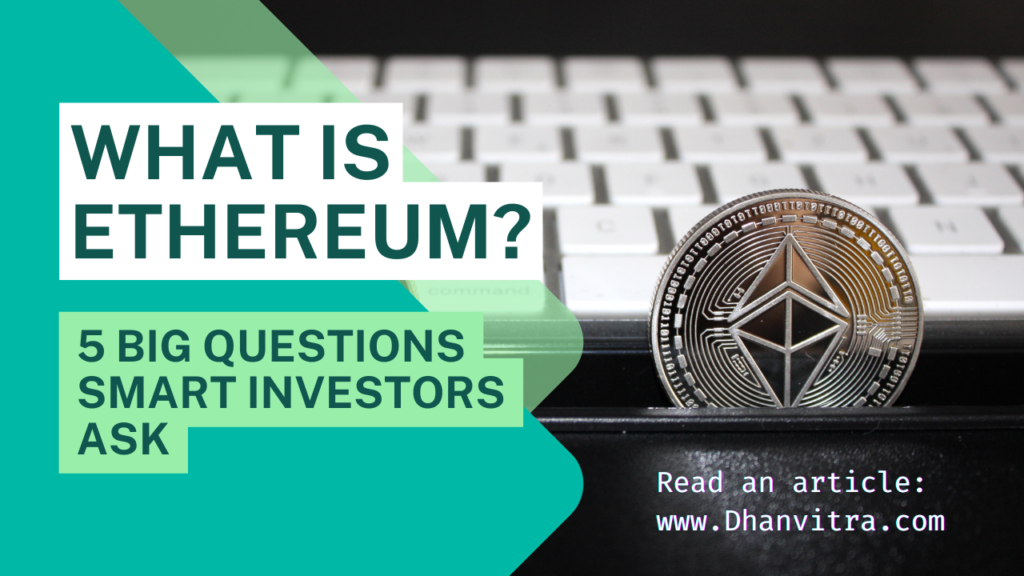
Welcome to Dhanvitra, where money meets clarity. If you’ve ever heard the word Ethereum and felt curious—but also a little confused—you’re in the right place. This blog is built for everyday readers who want smart financial knowledge without the heavy jargon. Here, we break complex topics into simple ideas you can actually use.
In this article, “What is Ethereum? 5 Big Questions Smart Investors Ask,” we start from the basics. No tech talk overload. No confusing charts. Just clear explanations that help you understand what Ethereum is and why people around the world are paying attention to it right now.
Ethereum is more than a cryptocurrency. It’s a powerful blockchain platform that supports smart contracts, decentralized apps, NFTs, and DeFi. If those words sound big, don’t worry—we explain everything step by step. Think of Ethereum as a digital foundation where the future of finance is being built.
At Dhanvitra, we focus on what matters to smart investors. Is Ethereum safe? Is it a good long-term investment? How is it different from Bitcoin? And most importantly, does it fit your financial goals? We explore these questions with real-world examples and simple language.
What Is Ethereum?
Ethereum is a blockchain platform, but calling it just a blockchain feels too small. Think of Ethereum as a shared digital world computer. Anyone can use it. No one owns it. And it runs exactly as programmed, without bias or downtime. That idea alone makes Ethereum powerful in today’s internet-driven economy.
At its core, Ethereum allows people to build and run applications without relying on a central company. These applications live on the blockchain, not on a private server. This means no single authority can shut them down, change rules overnight, or block users unfairly. For people who value openness and control, this is a big deal.
Unlike traditional apps, Ethereum apps are transparent. The code is visible. The rules are clear. When you interact with Ethereum, you don’t need blind trust. You can verify everything yourself. This shift from “trust me” to “verify me” is why Ethereum attracts developers, businesses, and investors worldwide.
In simple words, Ethereum is not trying to replace money alone. It is trying to rebuild how digital agreements, ownership, and services work on the internet. That’s what makes Ethereum more than just another crypto trend.
Who Created Ethereum and Why?
Ethereum was created by Vitalik Buterin, a programmer with a big vision. He noticed something important early on. Bitcoin was powerful, but limited. It could send value, but it could not easily run complex applications. Vitalik believed blockchain could do much more.
In 2013, he proposed Ethereum as a flexible blockchain. His goal was simple yet bold. Give developers a platform where they can build anything, not just a payment system. That vision attracted other developers, researchers, and believers from around the world.
Ethereum officially launched in 2015. It was not built to make one company rich. It was built as an open network. Anyone could contribute. Anyone could innovate. That open culture helped Ethereum grow faster than most blockchain projects.
The “why” behind Ethereum still matters today. It exists to reduce reliance on centralized power. It aims to give users more control over their data, money, and digital identity. That mission is why Ethereum continues to evolve instead of fading away.
How Does Ethereum Work?
Ethereum works through a global network of computers called nodes. These nodes run the same software and follow the same rules. When someone sends a transaction or runs an application, the network verifies it together. No central server decides the outcome.
The magic of Ethereum lies in smart contracts. When conditions are met, actions happen automatically. No human approval needed. No paperwork. No delays. It’s like a vending machine for digital agreements.
Ethereum now uses Proof of Stake to secure the network. Instead of energy-heavy mining, validators lock up ETH to help process transactions. This makes Ethereum more energy-efficient and scalable, which is a trending topic for environmentally aware investors.
Every action on Ethereum is recorded permanently. This creates trust through transparency. Once data is written, it cannot be secretly changed. That reliability is why developers trust Ethereum for finance, gaming, identity, and emerging Web3 applications.
What Is Ether (ETH)?
Ether, also called ETH, is the native currency of Ethereum. It powers everything on the network. Without ETH, Ethereum simply cannot function. It is not just money. It is fuel.
Whenever you send ETH or use an Ethereum app, you pay a small fee in ETH. This fee is known as gas. Gas keeps the network running smoothly and prevents spam. It rewards validators for securing the blockchain.
ETH also plays a growing role as an investment asset. Many see it as a long-term store of value tied to the growth of Web3, DeFi, and NFTs. As Ethereum usage increases, demand for ETH often rises with it.
Beyond payments and fees, ETH is now used for staking. People lock their ETH to support the network and earn rewards. This gives ETH real utility, not just speculative value.
Ethereum vs Bitcoin – Key Differences
Bitcoin and Ethereum often get compared, but they serve different purposes. Bitcoin focuses on being digital money. Ethereum focuses on being a digital infrastructure. One stores value. The other builds systems.
Bitcoin is simple by design. That simplicity brings strength and stability. Ethereum is flexible by design. That flexibility allows constant innovation. Developers choose Ethereum when they want to build, not just transfer value.
Ethereum transactions can involve complex actions like lending, trading, or gaming. Bitcoin transactions mainly move funds from one wallet to another. This difference explains why Ethereum supports thousands of applications while Bitcoin remains focused on payments.
From an investment angle, Bitcoin feels like digital gold. Ethereum feels like a tech platform. Smart investors often look at both, but for different reasons. One protects value. The other creates it.
Question 1 – Is Ethereum a Good Investment?
This is usually the first question smart investors ask, and honestly, it makes sense. Ethereum is not just a coin you buy and hope goes up. It is a living ecosystem that grows as more people use it. When you invest in Ethereum, you are indirectly investing in decentralized finance, NFTs, Web3 apps, and blockchain innovation.
Ethereum has shown strong long-term growth because developers keep building on it. More apps mean more usage, and more usage often increases demand for ETH. Think of it like owning land where new cities are being built every year. The land itself becomes more valuable as activity increases.
Of course, Ethereum is not risk-free. Market news, regulations, and global events can affect the ETH price. Smart investors usually think long-term and avoid emotional decisions.
Many global investors see Ethereum as a technology investment rather than a quick-profit asset. If you believe blockchain will power future finance and digital ownership, Ethereum often becomes a natural choice. That belief is what drives long-term confidence.
Question 2 – What Can You Build on Ethereum?
Ethereum is like an open playground for builders. Anyone can create applications without asking permission from a company or government. This freedom is why developers around the world choose Ethereum again and again.
On Ethereum, you can build decentralized apps, also called dApps. These apps run without central control. No single person owns them. Finance apps, games, marketplaces, and social platforms already exist on Ethereum.
Decentralized finance, or DeFi, is one of Ethereum’s biggest use cases. People lend, borrow, save, and trade money without banks. Everything runs on code. This is powerful, especially in countries where banking access is limited.
Ethereum also powers NFTs, digital identities, DAOs, and metaverse projects. Creators can earn directly from their work. Communities can govern themselves. This flexibility is why Ethereum is often called the backbone of Web3.
Question 3 – Is Ethereum Safe and Secure?
Security is a serious concern, and Ethereum takes it seriously. The Ethereum network is secured by thousands of validators worldwide. There is no single point of failure, which makes attacks very difficult.
Ethereum now uses Proof of Stake. This system encourages honest behavior by requiring validators to lock ETH. If they act badly, they lose money. This creates strong financial motivation to protect the network.
Smart contracts on Ethereum are transparent. Anyone can inspect the code. This openness helps developers find and fix issues faster. However, mistakes can still happen if developers write poor code.
For users, Ethereum is safe when used correctly. Most risks come from fake websites, bad links, or untrusted apps. Using trusted wallets and double-checking transactions goes a long way in staying secure.
Question 4 – What Are Ethereum Gas Fees?
Gas fees are the cost of using Ethereum. Whenever you send ETH or use an app, you pay a fee. This fee rewards validators who keep the network running smoothly.
Gas fees change based on network demand. When many people use Ethereum at the same time, fees go up. When usage is low, fees drop. It works like traffic on a busy highway.
Some people complain about high gas fees, but fees also show demand. High usage means Ethereum is valuable and widely used. That demand supports long-term growth.
To reduce fees, many users now use Layer 2 solutions. These are faster and cheaper networks built on Ethereum. They keep costs low while still benefiting from Ethereum’s security.
Question 5 – What Is the Future of Ethereum?
Ethereum’s future looks active, not static. Developers constantly upgrade the network to improve speed, cost, and scalability. This ongoing improvement keeps Ethereum competitive.
Layer 2 networks are growing fast. They allow millions of users to interact without slowing down the main network. This is key for global adoption and mass usage.
Ethereum is also central to Web3, where users own their data and digital assets. From decentralized identity to AI-powered blockchain apps, Ethereum is often the base layer.
Smart investors watch Ethereum not just for price, but for progress. As long as people keep building, experimenting, and innovating, Ethereum stays relevant. That relevance is what shapes its long-term future.
How to Buy and Store Ethereum Safely
Buying Ethereum today is much easier than it was a few years ago. Still, safety matters more than speed. Think of Ethereum like digital cash. If you lose it, there is no customer care number to call. That is why smart investors always focus on secure buying and safe storage from day one.
Best Exchanges for Buying Ethereum
Most people buy Ethereum from crypto exchanges. These are online platforms where you can convert your local currency into ETH. Well-known global exchanges follow strict security rules and identity checks. This reduces fraud and fake transactions.
Before choosing an exchange, always check its reputation. Look at how long it has been active and how many users trust it. A good exchange uses two-factor authentication and cold storage for funds. This acts like a digital lock and key for your money.
Also, avoid rushing into unknown platforms that promise cheap ETH or instant profits. In crypto, shortcuts often lead to losses. Slow and steady buying is always safer.
Hot Wallets vs Cold Wallets
Once you buy Ethereum, the next step is storage. This is where wallets come in. It is easy to use and perfect for daily transactions. Mobile wallets and browser wallets fall into this category.
Cold wallets work differently. They stay offline most of the time. Hardware wallets are the most common example. Because they are not connected to the internet, hackers find it hard to attack. This makes them ideal for long-term holders.
Many smart investors use both. They keep a small amount of ETH in hot wallets for use. The rest stays safe in cold storage, like money locked in a vault. Security in Ethereum starts with personal habits. Never store them in screenshots or emails. Write them down and keep them offline.
Avoid clicking on unknown links related to crypto. Fake websites often look real and steal wallet access. Always double-check URLs before connecting your wallet. One wrong click can empty your funds. Ethereum is powerful, but markets move fast. Smart safety habits protect both your money and peace of mind.
Common Myths About Ethereum
Ethereum has grown fast, and with growth comes confusion. Many myths stop people from understanding its real value. Let’s clear the noise and look at facts, not fear.
Myth: Ethereum Is Only for Developers
This is one of the biggest misunderstandings. Yes, developers build on Ethereum. But users benefit every day without coding anything. Apps for finance, gaming, art, and payments all run on Ethereum.
Using Ethereum is like using the internet. You don’t need to know how servers work to send an email. In the same way, Ethereum apps are becoming more user-friendly each year. Anyone can use them with a simple wallet.
As interfaces improve, Ethereum is becoming more accessible worldwide. The gap between tech experts and regular users is shrinking fast.
Myth: Ethereum Is Too Expensive to Use
Gas fees used to be high, and that created this myth. But the ecosystem has changed. Layer 2 solutions now reduce costs dramatically. Transactions can be faster and cheaper than before.
Ethereum is also upgrading continuously. The network focuses on scaling and efficiency. Fees depend on demand, not fixed rules. During low network activity, costs are often very reasonable.
So the idea that Ethereum is always expensive is outdated. Smart users choose the right time and tools to save money.
Myth: Ethereum Has No Real-World Use
Some believe Ethereum exists only for speculation. That couldn’t be further from reality. Ethereum powers real financial systems without banks. It enables digital ownership without middlemen.
Companies, artists, and developers already use Ethereum daily. From smart contracts to NFTs, real value moves across the network. Ethereum is not just a theory. It is already working behind the scenes.
As adoption grows, its real-world impact will become even more visible.
Conclusion
Ethereum is more than a cryptocurrency. It is a foundation for the future of the internet. Smart investors don’t just look at price charts. They look at utility, growth, and long-term relevance.
Buying and storing Ethereum safely is the first step toward confidence. Understanding myths helps you avoid fear-based decisions. Knowledge is your strongest asset in crypto.
Ethereum continues to evolve with technology trends like Web3, AI integration, and decentralized finance. For those willing to learn and stay patient, it offers more than just short-term gains. It offers participation in a digital revolution.
FAQs
Is Ethereum safe for beginners to invest in?
Ethereum is considered one of the most secure blockchain networks. Beginners can start safely by using trusted exchanges and secure wallets. Learning basic security habits makes a big difference.
What amount of Ethereum would be advisable for me to purchase as a newcomer?
There is no fixed rule. Many beginners start small to understand how Ethereum works. Investing only what you can afford to lose is always the smart move.
Can Ethereum replace Bitcoin?
Ethereum and Bitcoin serve different purposes. Bitcoin focuses on value storage. Ethereum focuses on applications and smart contracts. Both can exist together in the crypto ecosystem.
What makes Ethereum different from other blockchains?
Ethereum has the largest developer community and ecosystem. It supports smart contracts and decentralized apps at scale. This gives it strong long-term potential.
Is Ethereum a long-term investment?
Many investors see Ethereum as a long-term asset due to its utility and upgrades. Its future depends on adoption, innovation, and market conditions. Staying informed helps make better decisions.