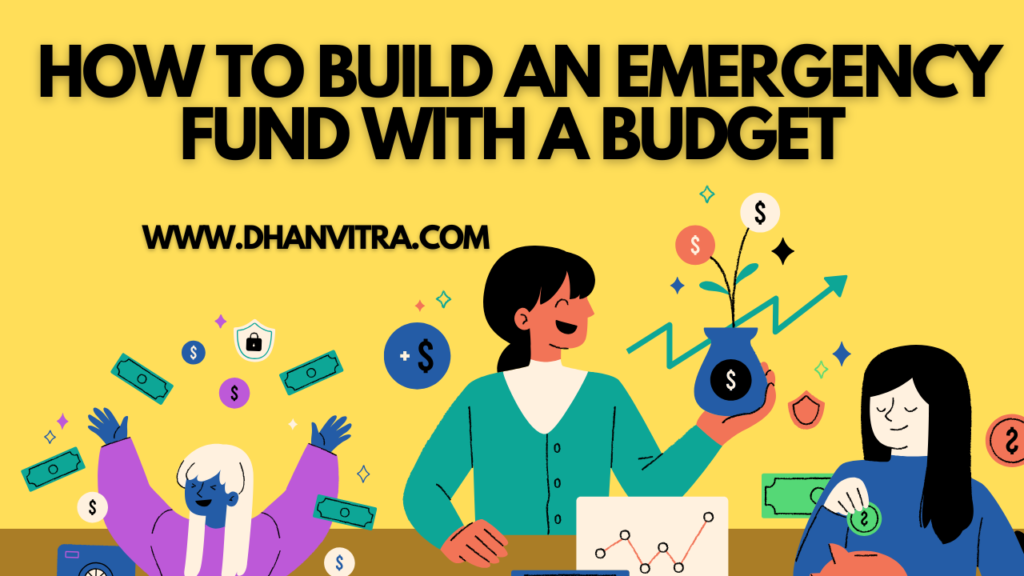
Hi everyone, welcome to Dhanvitra. If you’ve ever felt stressed about unexpected expenses, you’re not alone. Life is full of surprises—medical bills, car repairs, or sudden job changes—and that’s where an emergency fund comes to the rescue. In this guide, we’ll show you how to build an emergency fund with a budget that actually works.
No complicated formulas, no jargon—just simple, actionable steps you can follow today. By the end, you’ll know how to save consistently, stay prepared for the unexpected, and gain peace of mind knowing your finances are protected. Whether you’re just starting or looking to strengthen your savings, this article is designed to help you take control of your money the smart way.
What is an Emergency Fund?
When discussing personal finance, the term “emergency fund” frequently arises. But what does it really mean? Simply put, an emergency fund is money you set aside for the unexpected moments in life. It’s not for shopping sprees, new gadgets, or vacations. It’s for things you cannot predict—like a sudden medical bill, an urgent car repair, or even temporary job loss. Think of it as a financial lifeboat. Life can throw curveballs at any time, and this fund keeps you afloat.
The beauty of an emergency fund is that it gives you control over stress. When you know that a rainy day won’t ruin your life, you can breathe easier. This fund isn’t just about saving money; it’s about building peace of mind. Everyone, no matter where they live or what their income level is, can benefit from having one.
An emergency fund should ideally be kept separate from your regular bank account. This way, you won’t be tempted to dip into it for daily expenses. Some people like to call it a “financial fortress.” I like that idea because it paints a picture—you have a stronghold that protects you from unexpected financial attacks.
Why You Need an Emergency Fund
Can’t I just borrow money when something urgent comes up?” Well, you can, but borrowing often comes with interest, stress, and sometimes complicated repayment terms. Having an emergency fund means you’re financially independent in moments of crisis. It’s like carrying an umbrella when the sky is unpredictable—sometimes the storm hits, and you’re glad you planned.
An emergency fund protects not just your wallet but your mental health. Imagine losing a job unexpectedly. If you don’t have money set aside, anxiety takes over. You start stressing about rent, bills, and groceries. On the other hand, if you have three to six months’ worth of living expenses tucked away, you can navigate this period calmly, look for the right opportunity, and avoid making rash decisions just to cover immediate costs.
It also helps in small emergencies. Your car might break down, your fridge might stop working, or a family member might need sudden medical help. These situations are unpredictable. With an emergency fund, you won’t have to rely on credit cards, loans, or even friends and family. You have a ready-made safety net.
How Much Should You Save?
The million-dollar question is, how much should go into this fund? The answer isn’t one-size-fits-all. Financial experts often recommend saving enough to cover three to six months of your essential living expenses. But here’s the twist: what counts as “essential” depends on you.
Start by thinking about your monthly bills. Include rent, groceries, utilities, transport, insurance, and any debt repayments. These are non-negotiable costs—things you absolutely must pay each month. Then multiply that total by three or six, depending on how secure you want to feel.
For some, three months is enough if their income is steady. For others with irregular income, like freelancers or business owners, six months or more might be safer. It’s also wise to consider your family situation. If you have dependents, more savings can provide extra peace of mind. Even saving $500 or $1,000 initially puts you ahead. You can gradually build it up until it reaches your ideal target.
How to Build an Emergency Fund with a Budget
Step 1: Assess Your Monthly Expenses
Before you can save effectively, you need to know exactly how much money you spend every month. Start by reviewing your bank statements and bills from the last few months. Write down every essential expense—rent or mortgage, utilities, groceries, transportation, insurance, and minimum debt payments.
Next, separate the non-essential expenses. These are things like eating out, subscriptions you rarely use, or luxury purchases. You don’t have to cut everything out, but seeing where your money goes is eye-opening.
Once you have a clear picture, total your essential monthly expenses. This number is your baseline. Your emergency fund should aim to cover at least three to six times this amount. Knowing your expenses helps you set a realistic target and prevents underestimating how much you truly need.
Step 2: Set a Realistic Goal
With your monthly expenses in hand, it’s time to set a goal. But here’s the key: make it realistic. If your target seems too high, you might feel discouraged and give up. Break it into smaller, achievable milestones. For example, if your ultimate goal is $6,000, start by aiming for $1,000 first. Once you hit that, move to $2,500, and so on.
Setting a realistic goal keeps you motivated. It’s easier to celebrate small wins than feel overwhelmed by a massive target. You can even set a timeline—say, six months or a year—to reach each milestone.
Remember, this is a personal journey. Your goal should reflect your lifestyle, income, and comfort level. There’s no universal number. The important thing is to start and keep going consistently.
Step 3: Create a Budget That Supports Saving
Creating a budget might sound boring, but think of it as your roadmap to financial freedom. If you want to build an emergency fund, you must first know exactly where your money is going. Start by writing down all your sources of income and all your monthly expenses. This isn’t just about rent or bills; it includes groceries, transport, streaming subscriptions, and even your daily coffee habit. Once you see your spending laid out clearly, you’ll spot areas where you can cut back.
Don’t aim for a perfect budget right away. Start small. Maybe you can reduce takeout meals or pause that gym membership you rarely use. The key is to free up money without feeling deprived. This extra cash can go straight into your emergency fund. By treating your budget as a supportive tool rather than a restriction, you make saving feel natural and achievable.
Another trick is the 50/30/20 rule. Allocate 50% of your income for essentials, 30% for lifestyle, and 20% straight to savings. But remember, this is just a guide. Adjust the percentages based on your personal needs and goals. The goal is to make saving automatic, not painful.
Step 4: Automate Your Savings
Now that you have a budget, it’s time to make your savings effortless. Automation is your best friend. Do this on payday, so the money moves before you even think of spending it. Automating removes the temptation to skip a month. It also creates consistency.
Over time, small automatic transfers grow into a substantial safety net. Even if you can only save $50 or $100 per month initially, automation ensures that the habit sticks. Choose the right savings account for your fund. Look for accounts with high interest rates or minimal fees. Some people prefer online savings accounts because they often pay better interest than traditional banks.
The main point is to keep your emergency fund separate from your regular spending money. Out of sight, out of mind, but still working for you.
Step 5: Increase Your Income Streams
Sometimes budgeting alone isn’t enough. If you want to build your emergency fund faster, think about ways to boost your income. The world today offers so many opportunities—freelancing, part-time work, or even selling things you no longer need.
Side hustles are a great way to add extra cash without affecting your day job. It could be writing, graphic design, tutoring, or even driving for a ride-sharing app. Passive income streams are also worth exploring. Renting out a room, creating digital products, or earning through affiliate marketing can provide money that flows into your emergency fund with little effort once set up.
The key is to see income as flexible. Don’t limit yourself to just one source. Multiple streams provide security and accelerate the growth of your emergency fund. Even a few hundred dollars extra each month can make a huge difference over a year.
Step 6: Prioritise Emergency Fund Over Non-Essential Spending
Every time you earn money, ask yourself: “Do I need this now, or can it wait?” Avoid impulsive purchases, especially for things that aren’t essential. That daily coffee run or new gadget might seem small, but over time, it adds up. Prioritising your emergency fund means saying no to small splurges today to avoid big stress tomorrow.
Another mindset shift is to view your emergency fund as a security shield, not just money in a bank. When you see it this way, prioritising it becomes easier. It’s about protecting yourself and your family from unexpected financial storms.
Common Mistakes to Avoid
Even with the best intentions, mistakes happen. One of the most common errors is using the emergency fund for non-emergencies. That vacation or concert ticket might feel urgent in the moment, but it can derail months of saving.
Another mistake is ignoring inflation. If your money sits in a low-interest account for years, its value decreases over time. Choose a savings account or instrument that keeps pace with inflation, even if only partially.
Some people focus only on debt repayment or investment goals and forget the emergency fund. Balancing these priorities is crucial. You can pay off debt and invest, but without a safety net, even a small financial shock can be disastrous.
Lastly, not tracking progress can kill motivation. Regularly check your emergency fund balance, celebrate milestones, and adjust your budget as needed. Seeing tangible growth reinforces the habit and keeps you moving forward.
When Should You Use Your Emergency Fund?
Knowing when to tap into your emergency fund can be tricky. It’s not for small, daily expenses or impulsive buys. It’s there for situations that genuinely threaten your financial stability. Imagine your fridge suddenly stops working, and the repair cost is more than your monthly grocery budget. That’s a situation your emergency fund is meant to handle. Or consider a sudden job loss or medical emergency.
Once you’ve used your emergency fund, rebuilding it should be a top priority. Think of it as refilling a reservoir. Life will throw curveballs again, and having that buffer ready will make the next challenge easier. Start by reassessing your budget. See if you can temporarily reduce non-essential spending and redirect that money toward rebuilding.
Automating deposits helps, even if it’s a small amount. Every dollar counts. You can also look for additional income streams, like freelance projects or part-time work, to speed up the process. The goal isn’t just to get back to where you were—it’s to strengthen your financial safety net so the next unexpected expense doesn’t cause panic. Treat it as a financial reset that improves your money habits and gives you peace of mind.
Tips for Staying Motivated
Staying consistent with your emergency fund can feel like a slow climb, but motivation is key. Start by visualising your progress. Seeing your savings grow month by month can be surprisingly satisfying. Some people like to use charts or apps to track deposits. Celebrating small milestones keeps the journey fun—you don’t need a reason for a mini victory dance when you reach 25% of your goal.
Another tip is to link your fund to a personal “why.” Maybe it’s the peace of mind of knowing your family is secure or avoiding debt traps in the future. Constantly reminding yourself why you’re saving can help you resist the temptation to spend impulsively. Finally, make saving automatic. If the money moves itself to your emergency fund every month, you don’t even have to think about it, and your progress won’t stall.
Conclusion
Building and maintaining an emergency fund isn’t just a financial task—it’s a lifestyle choice. It’s about creating security, reducing stress, and giving yourself freedom to handle life’s surprises without panic. Start small if you must, but start. Assess your expenses, set a realistic goal, and stick to a budget that supports your savings plan.
Use your fund wisely, rebuild it after every use, and stay motivated by celebrating milestones. Over time, what seemed like a daunting challenge will become a habit, and you’ll enjoy the peace of mind that comes with knowing you are prepared. Remember, financial stability isn’t about how much you earn—it’s about how smartly you save and protect yourself.
FAQs
Should I include irregular expenses in my emergency fund calculation?
Absolutely. Irregular expenses like car maintenance, annual insurance premiums, or holiday spending can quickly drain your finances if unplanned. While your emergency fund mainly covers sudden emergencies, including a portion for predictable but irregular costs, ensures you don’t touch your fund for smaller, expected bills. Think of it as a buffer within a buffer—it keeps your main emergency fund untouched and available for true crises, giving you extra peace of mind.
Is it okay to invest my emergency fund in stocks or mutual funds?
Generally, it’s not recommended. An emergency fund should be liquid and easily accessible, which stocks and mutual funds are not. Market fluctuations can reduce the value of your fund when you need it most. Instead, keep your funds in a high-yield savings account, money market account, or a short-term fixed deposit. These options keep your money safe while still offering some interest. Think of your emergency fund as a safety net, not a growth investment—it’s there to protect you, not to make you rich.
How do I maintain my emergency fund while paying off debt?
Balancing debt repayment and saving can be challenging, but both are essential for financial health. Start with a small emergency fund of at least $500–$1,000 to cover minor surprises. Once that safety net is in place, focus on paying off high-interest debt aggressively. As debts reduce, increase your emergency fund contributions until you reach your target. This approach protects you from going deeper into debt if an unexpected expense arises, while still addressing long-term financial obligations.
Can my emergency fund be used for planned life events like weddings or vacations?
No, it shouldn’t. Using your emergency fund for planned events defeats its purpose. Life events like weddings, vacations, or home renovations should be saved separately in a different savings account. Your emergency fund is exclusively for unexpected situations—job loss, medical emergencies, urgent home repairs, or sudden travel for family emergencies. Keeping this clear distinction ensures your fund is always available when real emergencies strike.
How often should I review my emergency fund goal?
It’s smart to review your emergency fund at least once a year, or whenever your financial situation changes significantly. A salary increase, a new expense, or changes in family circumstances may mean you need a larger fund. Regularly reviewing ensures your emergency fund stays relevant and sufficient to cover your living costs. Treat this as an ongoing financial check-up, not a set-and-forget task.
What if I need to use my emergency fund more than once in a year?
It happens. Life isn’t always predictable, and emergencies can occur multiple times. After using your fund, prioritize replenishing it immediately. Assess whether recurring emergencies indicate a gap in your planning or insurance coverage. Sometimes, frequent withdrawals may suggest it’s time to increase your fund’s target. Remember, the purpose of your emergency fund is to keep you afloat during tough times—not to solve ongoing lifestyle or financial mismanagement issues.