Market winners rarely appear by accident. They are usually hiding in plain sight—within price trends, volume spikes, and financial data that most retail investors overlook. In today’s fast-moving markets, relying on tips or instincts is no longer enough. Smart traders use structured tools and disciplined methods to spot opportunities early and act with confidence.
A Stock Screener has become one of the most essential tools for modern investors who want clarity over chaos. It helps filter thousands of stocks into a focused list based on specific criteria like price, volume, growth, or valuation. At Dhanvitra, we often see that traders who consistently outperform are not guessing—they are systematically narrowing down their choices using data-backed screening techniques that align with their strategy.
Consider a trader tracking sudden breakouts in mid-cap stocks. Instead of scanning charts manually, they rely on a high-volume stock screener or a momentum stock screener to identify stocks hitting a 52-week high with strong buying interest. Similarly, long-term investors often depend on an undervalued stock screener to uncover fundamentally strong companies trading below their fair value. These real-world use cases show how the right filters can turn scattered information into actionable insights.
In this guide, you will discover seven practical and proven ways to use a Stock Screener to find high-potential trades across different strategies—from intraday setups to long-term investing. Each method is designed to help you move beyond noise and focus only on what truly matters in the market.
How Screeners Save Time and Improve Accuracy
In today’s fast-moving markets, thousands of stocks are traded every day, making it nearly impossible for any individual to manually track meaningful opportunities. This is where a Stock Screener becomes essential. Instead of going through endless charts and financial reports, a screener allows you to filter stocks based on specific criteria in seconds. Whether you are looking for high-growth companies or short-term trading setups, the process becomes significantly faster and more structured.
Accuracy is another major advantage that often gets overlooked. Human decision-making is naturally influenced by emotions, bias, and noise from news or social media. A well-configured technical stock screener or fundamental stock screener removes that emotional layer and focuses purely on data. For example, if you want stocks with low debt and high return on equity, a screener will consistently deliver results based on those exact filters—no guesswork involved.
Time efficiency also directly impacts better decision-making. When you save time on research, you can spend more energy on analysis and risk management. Traders using an intraday stock screener or a stock screener for day trading often rely on speed because opportunities can disappear within minutes. Having a system that instantly identifies potential trades gives you a strong edge in such environments.
Ultimately, screeners don’t just save time—they improve the quality of your decisions. They help you focus on high-probability setups instead of random picks. Over time, this disciplined approach can make a noticeable difference in consistency and results, especially for those serious about building a structured investing or trading strategy.
What Is a Stock Screener and How Does It Work?
A Stock Screener is a digital tool that helps investors and traders filter stocks based on specific financial or technical conditions. Think of it as a smart search engine for the stock market. Instead of browsing through every listed company, you define your criteria—such as price range, market cap, or momentum—and the screener narrows down the list to only relevant stocks.
At its core, a screener works by applying filters to a large database of stocks. These filters can be fundamental, like earnings growth or price-to-earnings ratio, or technical, such as moving averages and RSI levels. For instance, an RSI stock screener can help identify oversold stocks, while a moving average stock screener can highlight trends and potential breakouts. The tool processes this data in real time or near real time, depending on the platform.
Many modern tools also offer advanced capabilities. A custom stock screener allows you to combine multiple filters to create a personalized strategy. For example, you might look for stocks with strong earnings growth and increasing trading volume at the same time. This level of customization makes screeners useful for both beginners and experienced investors.
Understanding how a screener works is important because it shapes how you use it. It’s not just about finding stocks—it’s about finding the right stocks that match your strategy. When used correctly, a screener becomes a powerful decision-support system rather than just another tool.
Types of Stock Screeners You Should Know
Not all screeners serve the same purpose, and understanding the different types can help you choose the right one for your goals. Broadly, stock screeners fall into two main categories: technical and fundamental. A technical stock screener focuses on price movements, indicators, and chart patterns. This type is widely used by traders looking for short-term opportunities, such as breakouts or momentum plays.
On the other hand, a fundamental stock screener is designed for long-term investors. It filters stocks based on financial health, valuation metrics, and company performance. For example, a value stock screener may help you find undervalued companies, while a growth stock screener highlights businesses with strong revenue and earnings expansion. These tools are especially useful for investors who prefer a research-driven approach.
Some specialized screeners cater to specific strategies. A momentum stock screener identifies stocks with strong upward trends, while a stock breakout screener focuses on stocks crossing key resistance levels. Traders often combine these tools with real-time data to capture timely opportunities in the market.
In recent years, technology has taken things further with AI-driven and region-specific tools. An AI stock screener can analyze patterns and suggest potential trades, while an NSE stock screener or a US stock screener helps focus on specific markets. Choosing the right type depends on your trading style, time horizon, and comfort with data.
Best Stock Screener Tools (Free & Paid)
Choosing the right tool can make a big difference in how effectively you use a Stock Screener. There are several high-quality options available today, ranging from simple free tools to advanced paid platforms. For beginners, a free stock screener app or free online stock screener is often a good starting point. These tools offer basic filters like price, volume, and simple technical indicators, which are enough to get familiar with the process.
As your experience grows, you may find value in more advanced platforms. The best stock screener app typically includes features like real-time data, customizable filters, and advanced charting tools. Paid platforms often provide deeper insights, such as institutional activity or detailed financial analysis, which can be useful for serious traders and investors.
Another important factor is usability. Some tools are designed for quick scans, such as a live stock screener, while others are better suited for in-depth research. For example, traders who rely on speed may prefer platforms optimized for intraday analysis, while long-term investors might look for tools focused on financial fundamentals and valuation metrics.
Ultimately, the “best” screener depends on your needs rather than price alone. A beginner may benefit more from a simple interface, while an experienced trader might need advanced customization. The key is to choose a tool that aligns with your strategy and helps you make better, more informed decisions consistently.
7 Smart Ways to Use a Stock Screener to Find Winning Trades
1. Finding Breakout Stocks Using Volume & Price Action
One of the most practical ways to use a Stock Screener is to identify breakout stocks before they make big moves. Breakouts usually happen when a stock crosses a key resistance level with strong volume. This combination of price action and volume often signals that institutional money is entering the stock, which can lead to sustained upward momentum.
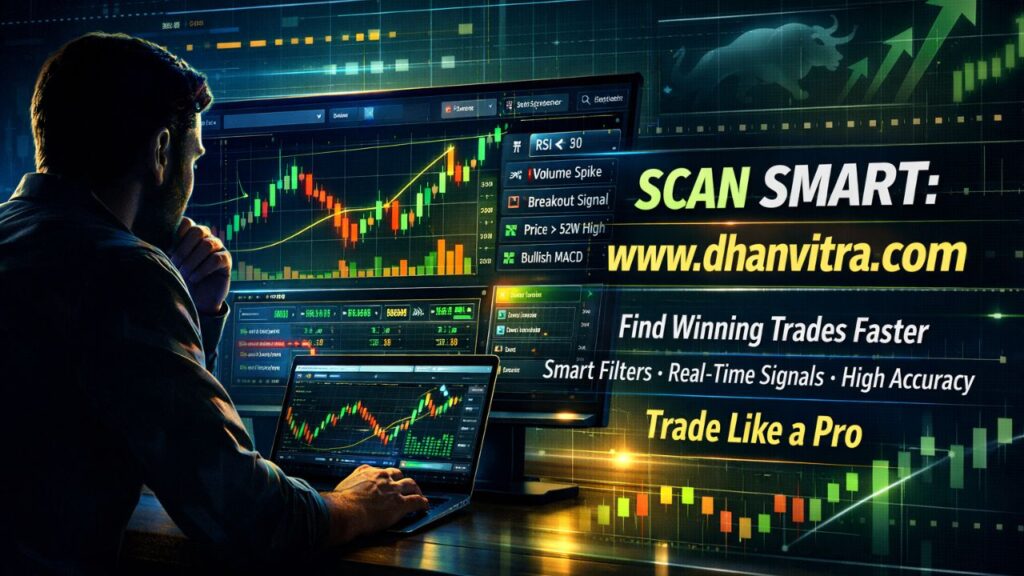
A good stock breakout screener or high volume stock screener helps you filter stocks that are trading near their recent highs while showing a sudden increase in volume. This is important because price alone can be misleading, but when supported by volume, it confirms genuine buying interest. For example, stocks hitting a 52-week high with rising volume often attract more traders, creating a self-reinforcing trend.
In real trading scenarios, breakout strategies work best when combined with market context. If the overall market is bullish, breakouts have a higher probability of success. However, blindly chasing every breakout can be risky. It’s important to validate results using charts and ensure the move is not already overextended.
Using a screener for this purpose brings structure to what would otherwise be guesswork. Instead of reacting late to trending stocks, you position yourself early, which is where most of the profit potential lies.
2. Identifying Undervalued Stocks with Low PE & High ROIC
For long-term investors, finding undervalued opportunities is often more rewarding than chasing short-term trends. A Stock Screener can simplify this process by helping you filter companies that are fundamentally strong but currently priced below their intrinsic value.
A value stock screener or low pe stock screener is commonly used to identify such opportunities. Low price-to-earnings (PE) ratios suggest that a stock may be undervalued compared to its earnings. However, PE alone is not enough. Adding filters like Return on Invested Capital (ROIC) ensures that you are selecting companies that are not just cheap, but also efficient in generating profits.
This approach reflects the strategies used by legendary investors who focus on quality businesses available at reasonable prices. In practical terms, you might screen for companies with a low PE ratio, high ROIC, and consistent earnings growth. This narrows down the list to fundamentally strong candidates worth deeper analysis.
Over time, this method helps build a portfolio based on discipline rather than speculation. While results may not be immediate, the compounding effect of investing in strong businesses at the right price can be powerful.
3. Identifying Momentum Stocks Using RSI and Moving Averages
Momentum trading focuses on stocks that are already moving strongly in one direction. Instead of predicting trends, the idea is to ride existing momentum. A Stock Screener plays a crucial role here by quickly identifying stocks that meet specific technical conditions.
Using an RSI stock screener, traders can find stocks that are gaining strength without being overbought. Typically, an RSI between 50 and 70 indicates healthy momentum. Pairing this with a moving average stock screener, such as stocks trading above their 50-day or 200-day moving average, provides additional confirmation of an uptrend.
Momentum strategies are especially useful in trending markets. Stocks that continue making higher highs and higher lows tend to attract more traders, creating sustained price movement. However, timing is key. Entering too late can expose you to sudden reversals, which is why combining multiple indicators improves reliability.
What makes this approach effective is its simplicity. Instead of analyzing complex data, you rely on a few proven indicators. With consistent use, this method can help traders stay aligned with market trends rather than fighting them.
4. Using Screeners for Intraday Trading Opportunities
Intraday trading requires speed, precision, and quick decision-making. A Stock Screener becomes an essential tool in this environment because it helps identify opportunities within minutes of market opening. Without it, scanning hundreds of stocks manually would be unrealistic.
An intraday stock screener or stock screener for intraday typically focuses on filters like sudden volume spikes, price gaps, and volatility. These factors indicate where action is happening in the market. For example, a stock showing high volume and a strong price move in the first hour often becomes a candidate for intraday trades.
The key advantage here is real-time data. A live stock screener allows traders to react quickly to changing conditions. Whether it’s a breakout, reversal, or news-driven movement, having immediate access to filtered results gives you a significant edge.
However, intraday trading also comes with higher risk. Screeners can help you find opportunities, but execution and risk management still depend on your discipline. Using stop-loss orders and sticking to a clear plan is just as important as finding the right stock.
5. Discovering Swing Trading Setups
Swing trading sits between intraday trading and long-term investing. The goal is to capture short- to medium-term price movements over a few days or weeks. A Stock Screener helps identify these setups by focusing on stocks showing early signs of a trend.
A swing trading stock screener often uses filters like RSI, moving averages, and support-resistance levels. For example, a stock bouncing from its 50-day moving average with an improving RSI can signal the start of a new upward move.
Unlike intraday trading, swing trading allows more time for analysis and decision-making. This makes it suitable for individuals who cannot monitor markets constantly. By using a screener, you can shortlist potential trades after market hours and plan your entries more calmly.
Consistency is key in swing trading. Not every setup will work, but following a structured approach increases the probability of success over time. Screeners make this process repeatable and less dependent on random market observations.
6. Tracking Insider Buying and Smart Money Moves
One of the more advanced uses of a Stock Screener is tracking insider activity. When company executives or large institutional investors buy shares, it often signals confidence in the company’s future performance. While not foolproof, this information can provide valuable insights.
An insider buying stock screener helps filter stocks where significant insider transactions have occurred. These moves are closely watched because insiders typically have better knowledge of their company’s prospects. When combined with strong fundamentals, insider buying can strengthen your investment thesis.
This strategy is particularly useful for long-term investors. Instead of reacting to short-term market noise, you focus on signals that indicate deeper confidence in a business. Not all insider buying leads to price increases, and timing can vary.
Using this method adds another layer of intelligence to your screening process. It shifts your focus from just numbers to behavior, which can often reveal opportunities that others might overlook.
7. Building a Custom Strategy with Advanced Filters
As you gain experience, relying on basic filters may no longer be enough. This is where a custom stock screener becomes powerful. It allows you to combine multiple conditions and create a strategy tailored to your trading or investing style.
For example, you might build a screen that looks for stocks with high earnings growth, increasing volume, and strong price momentum. This combination can be further refined using tools like a stock filter screener or an advanced stock screener, giving you precise control over your results.
The real advantage of customization is consistency. Instead of changing your approach based on market trends or emotions, you follow a predefined system. Over time, you can test and refine this system to improve results. Many traders also use backtesting to see how their strategy would have performed in the past.
Building your own strategy takes effort, but it pays off in the long run. It transforms you from someone who follows tips into someone who makes independent, data-driven decisions. That shift is what separates casual participants from serious market players.
How to Choose the Right Stock Screener for Your Strategy
Choosing the right Stock Screener is less about finding the most popular tool and more about aligning it with your personal trading style. A beginner often makes the mistake of using overly complex platforms with dozens of filters, which can lead to confusion rather than clarity. Instead, the goal should be to pick a tool that simplifies decision-making. For example, if you are just starting, a stock screener free version with basic filters like price, volume, and market cap is more than enough to build confidence.
Your trading approach plays a critical role in this decision. A day trader will benefit from an intraday stock screener that offers real-time data and fast updates, while a long-term investor may prefer a fundamental stock screener that focuses on metrics like earnings growth, return on equity, and valuation ratios. Matching the screener to your strategy ensures that the data you see is actually useful, not just overwhelming.
Another important factor is usability. A clean interface, customizable filters, and reliable data sources make a big difference in daily use. Many traders eventually shift toward a custom stock screener because it allows them to create personalized rules based on their experience. This flexibility helps in refining strategies over time instead of relying on generic presets.
Finally, think about scalability. As your knowledge grows, your screener should grow with you. Starting simple and gradually moving to more advanced tools ensures that your decisions remain grounded and practical. The right screener doesn’t just show you stocks—it helps you think clearly about why those stocks matter.
Advanced Tips to Maximize Your Stock Screener Results
Once you understand the basics, the real edge comes from how you use your Stock Screener rather than which one you use. Many experienced traders combine multiple filters instead of relying on a single metric. For instance, pairing a momentum stock screener with a high volume stock screener can help identify stocks that are not only moving fast but also backed by strong market participation. This combination often signals more reliable trading opportunities.
Another powerful approach is blending technical and fundamental analysis. A technical analysis stock screener might highlight stocks breaking above their moving averages, but adding a filter for strong financial health ensures you’re not chasing weak companies. This balance is especially useful for swing traders who want both momentum and stability in their picks.
Timing also plays a crucial role. Using tools like a premarket stock screener or a live stock screener for free can help you spot opportunities before the broader market reacts. Early identification gives you better entry points and reduces the risk of buying after a stock has already made its move. This is where disciplined routine matters more than luck.
Lastly, always review and refine your filters. Markets change, and a strategy that worked last year may not perform the same today. Keeping a simple journal of your trades and the filters used can reveal patterns over time. This continuous improvement mindset is what separates consistent traders from those who rely purely on chance.
Conclusion: Turn Data into Profitable Trading Decisions
A Stock Screener is not a shortcut to instant profits, but it is one of the most powerful tools to bring structure to your trading decisions. In a market filled with thousands of stocks, having a clear filtering system allows you to focus only on opportunities that match your strategy. This shift from random selection to data-driven analysis is where most traders begin to see real progress.
The key takeaway is consistency. Whether you are using a best stock screener or a simple online stock screener, the value comes from applying the same logic repeatedly and learning from the results. Over time, this builds a disciplined approach where decisions are based on evidence rather than emotion. That alone can significantly reduce costly mistakes.
It’s also important to stay realistic. Even the most advanced stock analysis screener cannot predict the market with certainty. What it can do is improve your odds by helping you identify patterns, trends, and undervalued opportunities. When combined with proper risk management, this creates a strong foundation for long-term success.
If you are just starting, begin with a simple setup and focus on understanding how filters work. As your confidence grows, refine your strategy and explore more advanced features. The goal is not to chase perfection but to build a system that works reliably for you in different market conditions.
Frequently Asked Questions
What is the best stock screener for beginners?
For beginners, the best approach is to start with a simple, easy-to-use platform that offers basic filters such as price, volume, and market cap. The best free stock screener is often sufficient in the early stages because it helps you understand how screening works without overwhelming you. As you gain experience, you can gradually explore more advanced tools.
How do I use a stock screener for intraday trading?
Using a stock screener for intraday trading involves focusing on real-time data, including price movements, volume spikes, and volatility. Traders often rely on an intraday stock screener free tool to quickly identify stocks that are actively moving during market hours, allowing for faster decision-making.
Can stock screeners guarantee profitable trades?
No, a Stock Screener cannot guarantee profits. It is a tool that helps you filter and identify potential opportunities based on specific criteria. Profitability depends on how well you analyze those results, manage risk, and execute trades with discipline.
Which filters are best for swing trading stocks?
Swing traders often use a mix of technical indicators like moving averages, RSI, and trend patterns. A swing trading stock screener combined with a moving average stock screener can help identify stocks that are trending and likely to continue their movement over a few days or weeks.
Are stock screener apps reliable for real-time trading?
Many modern apps provide reliable data, especially premium ones. However, even the best stock screener app may have slight delays depending on the data source. For critical trades, it’s always wise to cross-check information with your trading platform.
What is the difference between technical and fundamental screeners?
A technical stock screener focuses on price patterns, indicators, and trends, while a fundamental stock screener analyzes company financials like earnings, revenue, and valuation. Both serve different purposes and are often used together for better decision-making.